

Most fertilizer sold to gardeners uses urea as the nitrogen source, but most commercial greenhouses use nitrate as their main nitrogen source. Why?
I have been spending time in the African violet (AV) community, and most growers, including the African Violet Society of America (AVSA), recommend using nitrate rather than urea. But Schultz African violet fertilizer is very popular in this group, and it is mostly urea. In a test reported on by AVSA of the top AV fertilizers, one used only urea, and the other used no urea. A prominent breeder stated: “I’ve used fertilizer containing urea for nearly 30 years“.
I have used urea-based fertilizer for 50 years on all kinds of houseplants, and it seems to work, though recently some of my streptocarpus seedlings may be showing yellow leaves. It is time to understand the urea vs nitrate controversy in more detail.
Watch the video version of this blog: https://youtu.be/YdY5S7RUKMo
Key Takeaways
- Both urea and nitrate fertilizers work well for houseplants.
- Urea fertilizer has some potential issues every gardener should understand.
This post uses affiliate links
Common Myths About Nitrogen
Myth #1: Potting soil does not contain the microbes needed to convert urea into useable forms of nitrogen.
New potting media may not contain enough bacteria to convert urea, but as soon as it is used, bacteria start growing in it. Within a week, they are at levels high enough to convert urea.
Myth #2: Someone on the internet uses only nitrate, so I should do the same.
This is how most people decide which fertilizer to use. However, the online discussions rarely include key pieces of information like the type of water being used. What someone else does may not work for you because you use different water.
Myth #3: Urea is known to cause root burn.
Urea is a very concentrated form of nitrogen (46%), so too much can be applied. Too much nitrogen of any form, including nitrate, will burn roots. The problem is not the type of nitrogen, but the amount used. Too much fertilizer harms plants.

Nitrogen Comes in Three Inorganic Forms
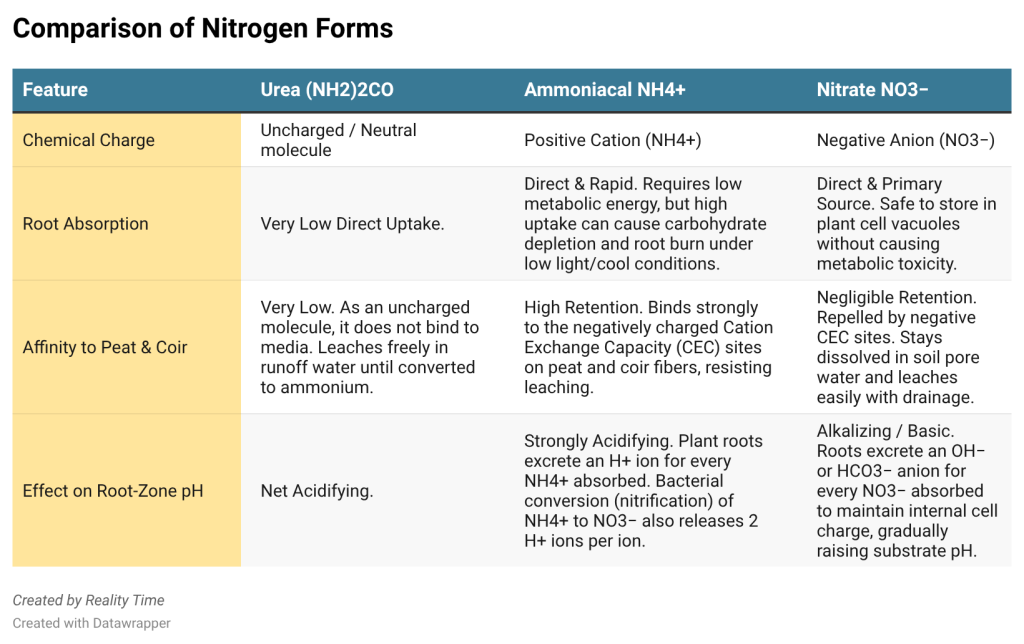
The nitrogen used in fertilizer comes in three main forms: urea, ammoniacal (NH3 + NH4), and nitrate.
Urea is an inexpensive source of nitrogen that plants have difficulty using directly. Microbes convert it to ammoniacal nitrogen and nitrate, which plants can use.
Ammoniacal nitrogen is held tightly by peat moss and coir, which means it is not lost by rain or added water. However, it can build up in the potting media. Urea and nitrogen are easier to flush out.
Urea and ammoniacal nitrogen tend to make the potting media more acidic, while nitrate makes it more alkaline.
Fertilizer Products for Home Use
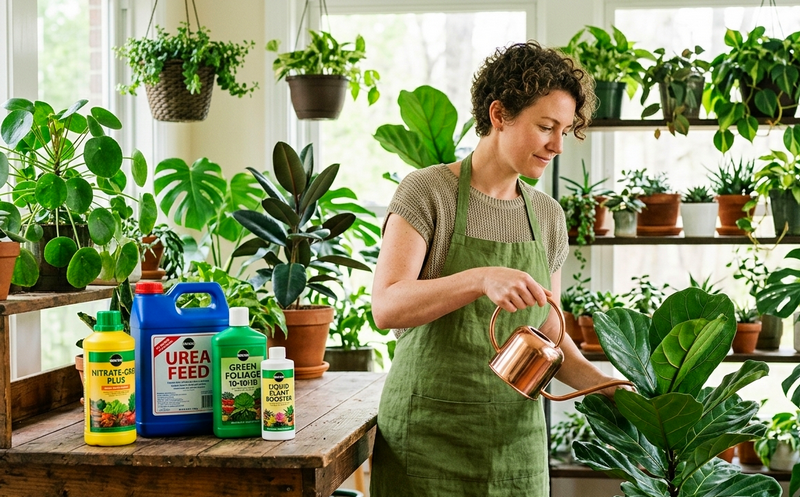
Synthetic fertilizer can contain any of the above three forms of nitrogen, and products usually list the amounts of each on the label. If not, it is best to select a different product. Most home-use fertilizer contains mostly urea. Products for hydroponics contain nitrate. Products for commercial greenhouses contain mostly nitrate.
Conversion of Urea to Ammonium and Nitrate
Urea can be converted to ammonium, which can then be converted to nitrate. The extent of this conversion depends on the media it’s in.
Urea in Water
Fertilizer mixtures are generally made up in water. All three forms of nitrogen dissolve easily in water, and because the number of microbes in water is low, each form of nitrogen is fairly stable. For example, at neutral pH, urea takes 30 years to break down into ammonium.
Urea in Potting Media
The story is different in potting media. Here, a microbe-produced enzyme called urease converts urea to ammonium. Urease is ubiquitous in nature, produced not only by soil bacteria and fungi but also by plant roots themselves.
Studies have shown that this process, known as hydrolysis, happens fairly quickly. One study evaluated urea hydrolysis across 14 commercial soilless potting media (including peat-vermiculite and pine bark blends) under both planted and unplanted conditions. In unplanted mixes, 30% to 94% of applied urea was hydrolyzed into ammonium within 24 hours, and 51% to 99% within 4 days. The presence of plant roots (planted) further accelerated hydrolysis rates across all peat-containing media.
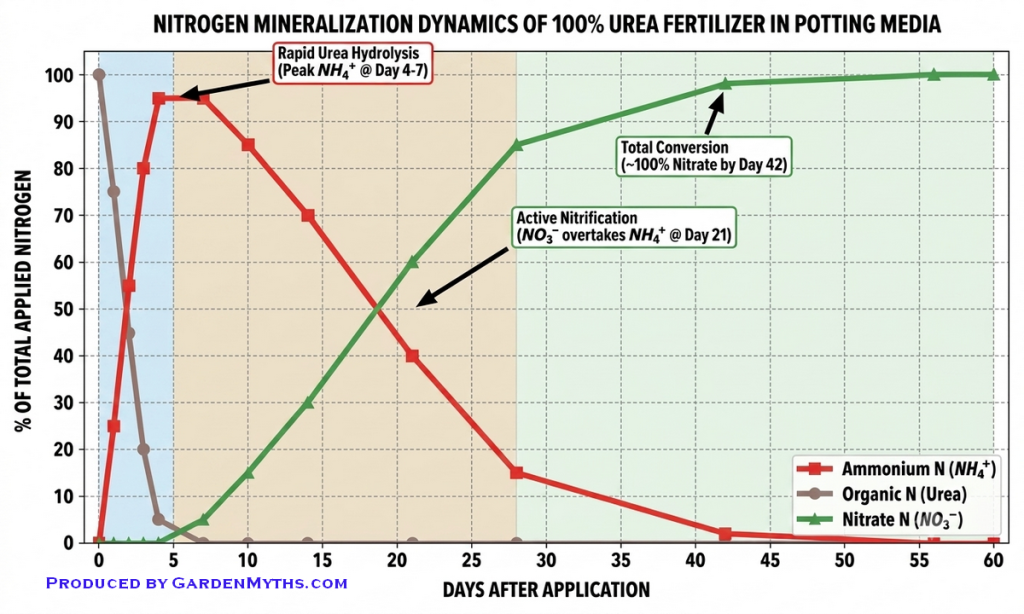
Another study looking at peat-based media concluded that peat media maintain active pools of urease enzymes, causing steady mineralization of nitrogen fertilizers into ammonium over time.
Discussions about whether urea or ammoniacal nitrogen are better are kind of mute because urea is converted to ammonium in a couple of days. For most fertilizer discussions, they can be considered to be the same thing.
What happens to ammonium?
Ammonium binds to the negatively charged sites on the potting media, and from there, it can be absorbed by roots. It is also oxidized by bacteria into nitrate through a process called nitrification. Nitrification can take 2 to 3 weeks in fresh media, but once plants are established, the process is much quicker, depending on temperature and pH. Nitrifying bacteria prefer a warmer environment with a neutral or alkaline pH. Coir and bark mixes have higher levels of nitrifying bacteria than peat.

Summary
In home conditions, urea is converted to ammonium in a day or two, making it available for plants to use. It is then converted to nitrate. Except for a slight delay in time and the effect on pH, urea is just as good as nitrate, provided ammonium levels do not get too high.
Effect of pH: Balancing Alkalinity with Nitrogen Forms
Peat moss is the most common potting media and it has an acidic pH. Urea and ammoniacal nitrogen acidify the media even more. When the pH drops too far, plants can no longer access the nutrients they need, a condition called nutrient lockout, and they stop growing.
Your water alkalinity also affects the media pH. High-alkalinity water contains large amounts of dissolved bicarbonates and carbonates, which act like liquid limestone, continuously neutralizing acid and driving substrate pH up over time.
Commercial growers have developed guidelines for matching the nitrogen source to water alkalinity.
Important Note: We are talking about alkalinity, not hardness. To understand the difference, have a look at my article called: Water Hardness and Alkalinity – Why They Both Matter.
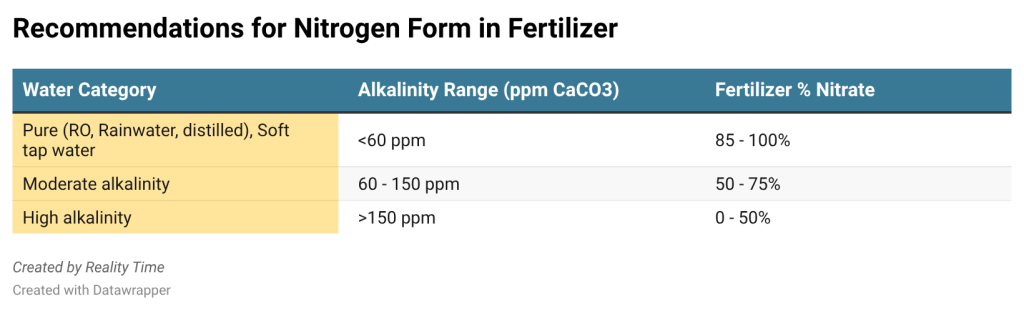
The above table shows the recommended ratio of nitrate in your fertilizer to maintain a good soil pH for plants. Water with a high alkalinity can be combined with an acidic fertilizer that will neutralize some of the alkalinity and lower pH.
Note that commercial greenhouses with high alkalinity usually reduce the alkalinity to 100 ppm using acids, and then mix in an appropriate amount of urea/ammonicial nitrogen to lower it even more.
How do you know the alkalinity of your water? Check with the municipality that delivers your tap water: they can provide the value, and it should be published on their website. If you are on a private well, you can have your water tested.
Ammonium Toxicity
Plants absorb both nitrate and ammonium, but they behave differently once inside plant cells. Ammonium is very reactive and, at higher levels, causes ammonium toxicity. Excess nitrate is less reactive and is collected in vacuoles, the cell’s way of safely storing chemicals. Nitrate can be stored in large amounts without becoming toxic.
Ammonium toxicity affects both root systems and foliage, often mimicking pathogen damage or severe micronutrient deficiencies:
Root System Damage:
- Root Tip Necrosis: The primary root tips and fine feeder roots turn brown/black, die back, and lose their fine root hairs.
- Stunted, “Stubby” Root Architecture: The root system stops expanding because carbohydrate reserves in the roots are exhausted trying to detoxify the incoming ammonium.
Foliar Symptoms:
- Marginal Leaf Chlorosis & Necrosis: Yellowing along the outer edges of mature leaves, quickly progressing to dry, brown, dead leaf tissue.
- Leaf Cupping & Distortion: Young leaves may curl downward or display epinasty (twisted growth).
- Interveinal Chlorosis: Yellowing between leaf veins due to secondary inhibition of cations like potassium, calcium, and magnesium.
- Overall Stunting and Wilting: Even when media is moist, damaged roots cannot take up water efficiently, causing vascular wilting.
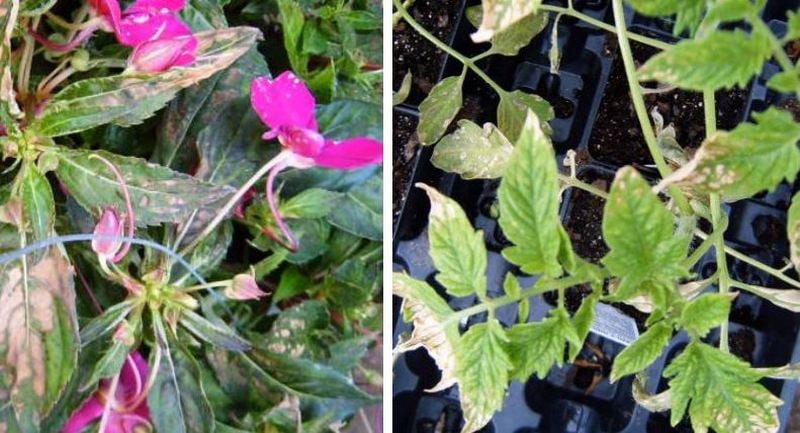
There is a higher risk of ammonium toxicity when temperatures and/or lighting are low.
- Low Light: In low light, plants don’t grow as fast, use less nitrogen, and ammonium builds up in tissues.
- Low Temperatures (below 15 C or 60 F): This has two effects. Plants don’t grow as much, and nitrifying bacteria are less active, which means ammonia is not converted to nitrate and builds up in soil.
A lot of houseplants are grown in low light conditions.
Note: Urea/ammonium toxicity is not a problem in real garden soil.
Small Plants and Large Pots Are More Susceptible?
Small plants like seedlings and adult plants in oversized pots are more susceptible to the negative effects of urea and ammonium.
A large plant growing in a smaller pot has a relatively large root system, which is actively removing nitrogen from the soil. It also has a small amount of potting media relative to the root system. The result is that the potting media dries out more quickly after watering. A non-waterlogged environment is better for microbes, and they remain active, quickly converting urea to ammonium to nitrate.
The larger root system removes nitrogen faster, reducing the chance of ammonium toxicity.
Now let’s have a look at small seedlings growing in a relatively large pot, or an adult plant that is growing in an oversized pot. There is a large amount of potting media relative to the size of the root system, and it dries out much more slowly after watering. The wet condition reduces the oxygen level, which in turn inhibits microbe activity. Conversion of ammonium to nitrate slows down, allowing ammonium to build up.
At the same time, a smaller root system removes less nitrogen from the soil. Both ammonium and nitrate build up in the soil.
The risk of ammonium reaching toxic levels is much higher with small seedlings and plants in large pots. Plants in these situations are therefore more likely to be harmed by urea and ammoniacal nitrogen fertilizers.
Flushing Is Less Effective
Flushing is a technique for washing salts out of soil. In short, you pour water in the top of the pot and let it drain out the bottom. The excess water washes soluble chemicals out of the potting media.
Urea and nitrate are easily removed using this method. However, ammonium sticks to the media and is difficult to flush out. Flushing is not very effective for solving ammonium toxicity issues.
Is Organic Fertilizer Better?
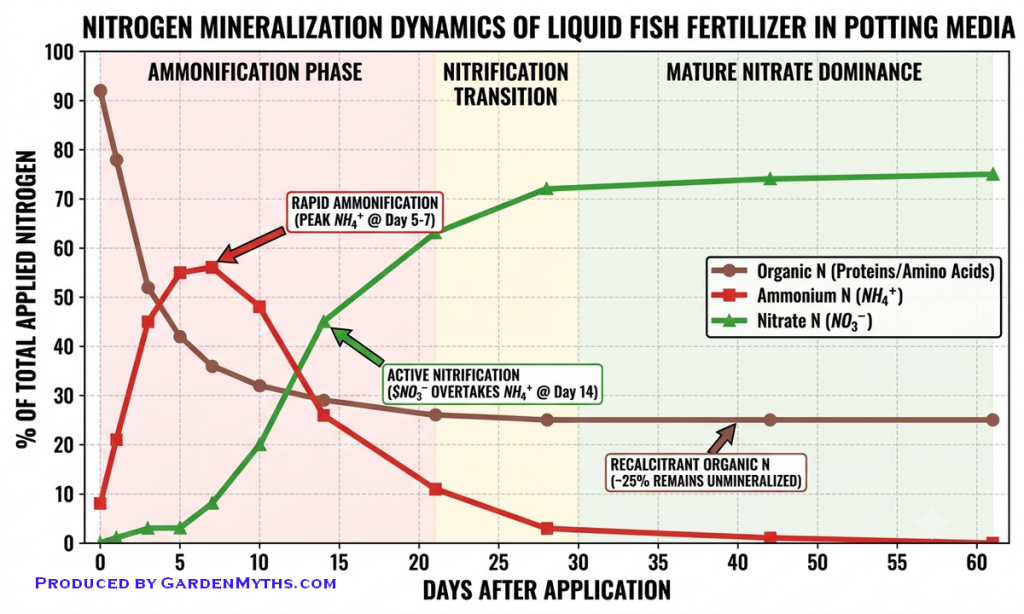
Some of you consider organic fertilizer to be better than synthetic fertilizer, but that is incorrect. Plants are able to use some simple amino acids, but the majority of the nitrogen in organic fertilizer is not available to plants until the large organic molecules are converted to simple inorganic forms of nitrogen, mainly ammonium and nitrate.
The following chart shows the changes that occur in fish fertilizer. When applied, more than 90% is in organic forms that are unavailable to plants. These are converted to ammonium in about a week, and then slowly to nitrate.
Note that this process is not much different than applying urea fertilizer. Both urea and organic nitrogen are converted to ammonium and then more slowly to nitrate.
Pros and Cons of Nitrate Fertilizer
The Pros:
- Lower Risk of Ammonium Toxicity: No buildup of ammonium.
- Fewer pH Shifts: The pH of the potting media tends to change less using nitrate fertilizer.
- Direct Availability: No reliance on microbes to convert urea into a usable form.
The Cons:
- Higher pH: Adding nitrate to an alkaline potting media raises the pH even more.
- Cost: Nitrate is more expensive than Urea.
- Lower NPK: Fertilizer concentrates using nitrate tend to have lower NPK values.
Summary
All three forms of nitrogen work. Urea is less expensive and works well for most home gardeners, especially in these situations:
- Mixing with high-alkalinity water.
- Using lower levels of fertilizer.
- Growing adult plants in suitable pots.
- Using a more porous medium that dries quicker.
- Growing in higher light conditions.
If the above do not apply to your growing conditions, or if you are less experienced, it is safer to use nitrate-based fertilizer.


Great article! It turns out that my tap water here in California can be fairly alkaline (pH 7.1 to 8.6, with an average of about 8.0). So it makes sense to use ammonium sulfate instead of urea.
“Irvine tap water hardness ranges from about 107 ppm to 308 ppm (parts per million) as CaCO₃ (6 to 18 grains per gallon), depending on whether the blend is from local groundwater, local surface water, or imported supplies managed by the Irvine Ranch Water District.Water Hardness Breakdown by Source
Local Treated Groundwater: ~107 – 119 ppm as CaCO₃ (Moderately hard)
Imported Treated Water (MWD): ~265 ppm as CaCO₃ (Hard)
Local Treated Surface Water: ~276 – 308 ppm as CaCO₃ (Hard to very hard)”