Humidity domes have become very popular for both seed starting and leaf propagation. They are a great tool when used properly, but many people are harming plants by using them incorrectly.
Let’s understand:
- What they do.
- When to use them.
- When not to use them.
Watch the YouTube video for this blog post: https://youtu.be/XaFgmgzzCD4
Key Takeaways
- Used incorrectly, humidity domes can harm plants.
- Use them when plants don’t have roots, or very few roots.
What Are They and Why Use Humidity Domes?
A humidity dome is any device that is placed over a plant to create an enclosed space. This can be a commercial plastic dome or a Ziploc bag. If you are starting seeds or propagating leaves, clear plastic clamshells from the grocery store work well.
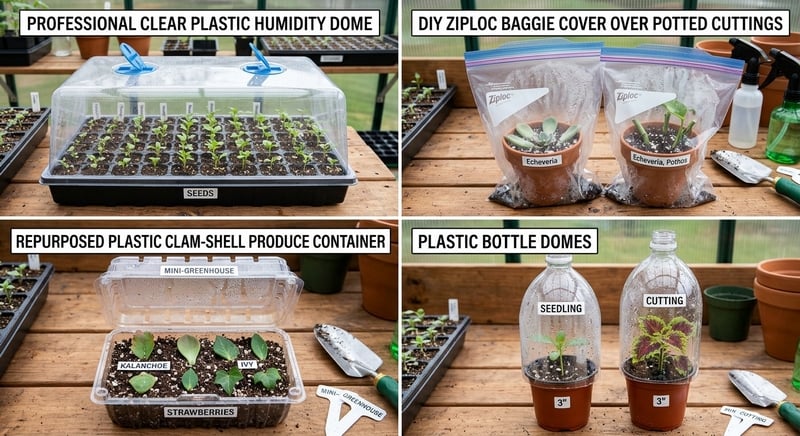
A plant without a humidity dome is exposed to about the same humidity as your room humidity. This is usually between 20 and 80% for most homes, and if you control humidity, it is usually around 50%, which is ideal for most plants. A plant covered with a humidity dome is sitting in almost 100% humidity.
To understand the importance of this, you have to understand how water moves through a plant, a process called transpiration. Roots absorb water from the soil and move it up the plant in the xylem. The plant uses water where needed, but roots provide more water than the plant needs. The excess builds up in the leaves, keeping them turgid, until it is expelled through openings in the leaf called stomata.
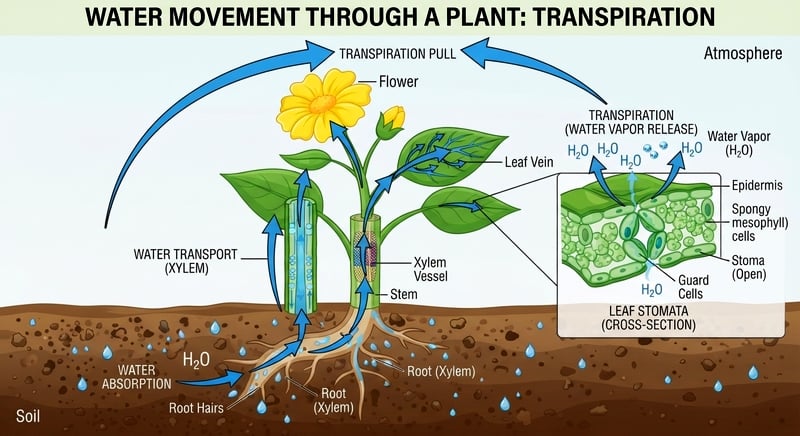
This constant movement of water up the plant is critical for survival. Not only does it keep the plant hydrated, but it brings nutrients along with it.
If something happens to the roots, the plant is no longer able to pump water up to leaves and flowers, but water is still lost through the stomata, causing the plant to go limp. Limp leaves are a sign that something may be wrong with the roots.

The amount of water lost through the leaves depends on the air humidity. When humidity is high, very little water can escape from the plant. When humidity is low, water is lost more quickly. A humidity dome increases air humidity and decreases water loss from the plant.
Use a humnidity dome only when plants are having trouble getting water from their roots.
What happens to healthy plants in a high humidity environment? They cry! Read more about guttation in Do Stressed Plants Cry?
When Should You Use a Humidity Dome?
You use a humidity dome when plants can’t get enough water through their roots to support the above-ground parts of the plant. The following conditions cause such a problem.
Very Low Air Humidity: Low humidity puts stress on the plant, and the roots can’t keep up with demand.
Seeds and Seedlings: Seeds need to absorb water to trigger the germination process. Once they have absorbed some water, they should not dry out, or they will die. Covering seeds is a common practice to keep them moist. Once a seed germinates, it has a very small root system, but it is usually larger than the top growth since roots develop before leaves.
Domes add value to surface-sown seed, but not to seeds planted deeper.
A common myth: “Using humidity domes speeds up seed germination”. That is not true. Once a seed has absorbed water, the rate of germination is not affected by a dome.
Leaf Cuttings: Leaf cuttings are a common propagation method for African violets, succulents, and Streptocarpus. Leaf cuttings have no roots and therefore can absorb almost no water from the soil. They need to be domed until they form roots.
Softwood and Hardwood Cuttings: These also have no roots and need to be domed until they form roots. Some people root cuttings in water, but without roots the plant still struggles to get water, and a dome helps.
Transplants: Some root damage is done when a plant is transplanted. It therefore has a harder time getting water through its roots. A humidity dome can help, but if the transplant was done carefully, it is not normally required.
Other Ways to Raise Humidity
The internet is full of other suggestions for raising humidity for plants, but most of these, like misting and pebble trays, do not work. Get the full story at Increasing Humidity for Indoor Plants – What Works and What Doesn’t.
Stop Using a Humidity Dome!
A lot of gardeners have been convinced that humidity domes are an effective way to grow plants, so they now use them far too often. They forget plants don’t use domes in nature and still survive.
Why are humidity domes a bad thing?
They grow weak plants. Sitting in high humidity means the plant does not have to grow a large root system, nor does it have to manage water loss in leaves – it becomes lazy. The resulting plant grows a bit differently, resulting in a plant that is less able to survive without a dome – it is a weak plant.

Mold and fungus are big concerns. Many fungal spores thrive in higher humidity. A humidity dome can lead to fungal growth on plants. Damping off disease is especially a problem with seedlings left domed too long.
Here are two important rules for using a humidity dome:
- Use it only when required.
- Remove it as soon as possible.
What does that mean for our list of reasons for using a dome?
Very Low Air Humidity: A dome increases humidity, but it is best to use one that can be vented to create a humidity of about 50%. A humidity dome can help, but increasing room humidity is a better option.
Seeds and Seedlings: Since roots develop before leaves, a seedling gets enough water through its roots. Remove the dome as soon as they germinate. You can do a partial removal for a day or two, but to be honest, they don’t need it provided your room humidity is 40% or higher. In a very dry environment, a couple of days with a slightly higher humidity might help.
I grow a lot of streptocarpus from seed. When they germinate, they are so small I can barely see them. They go from 100% humidity to room humidity (50%) instantly and do fine.
Leaf Cuttings: Tug at them every few days. When you feel resistance, they have started making roots, and the dome should be removed. This is normally long before you see baby plants.
Softwood and Hardwood Cuttings: Treat them like leaf cuttings. Resistance when you tug on them indicates they have roots, and the dome should be removed. The growth of new leaves does not indicate they have roots.
Transplants: Don’t dome them, but watch them closely for a couple of days. If the leaves droop, it is a sign of stress. Dome them and wait a couple of days. Then remove the dome and watch for more drooping. An exception is when you know that you removed most of the root system during division or repotting. These will have problems and should be domed for a week or so.
I never dome transplants, and even most divisions are not domed.