

Humidity is a form of water, and water is critical for plant growth. We can all sense high and low humidity, but what effect do these extremes have on plants? How does a gardener control humidity to help plants grow well?
Let’s clarify the misunderstandings and myths about providing humidity for plants.
What Is Humidity?
Humidity is the amount of water in the air. When liquid water evaporates, it turns into a gas we call “water vapour”. Humidity measures the amount of water vapor in the air and can be expressed as both absolute humidity and relative humidity.
- Absolute Humidity: This describes the total amount of water in the air, regardless of temperature. It is expressed as grams per cubic meter (g/m^3).
- Relative Humidity (RH): This is the % you see in weather reports. It measures how close the air is to being saturated (full) of water. At 100%, the air is fully saturated with water.
Temperature affects the amount of water that air can hold. Warm air can hold more water vapor than cold air. Imagine the air as a sponge. A “warm” sponge is giant and can soak up a gallon of water. A “cold” sponge is tiny and can only hold a cup.
- If you have a cup of water in the giant warm sponge, the relative humidity is low (maybe 10%).
- If you take that same cup of water and squeeze it into the tiny cold sponge, the relative humidity is high (100%), and the sponge starts to leak.
This is why “Relative” humidity is so important. If the temperature drops at night but the amount of moisture stays the same, the relative humidity rises. When it hits 100%, we reach the Dew Point, and the water vapor condenses into liquid—forming dew, fog, or rain. This is why plants in your garden have droplets on them early in the morning, in spring and fall, when nights are cool.
How Does Humidity Affect Us?
Humidity dictates our comfort because of how it interacts with our body’s cooling system: sweating.
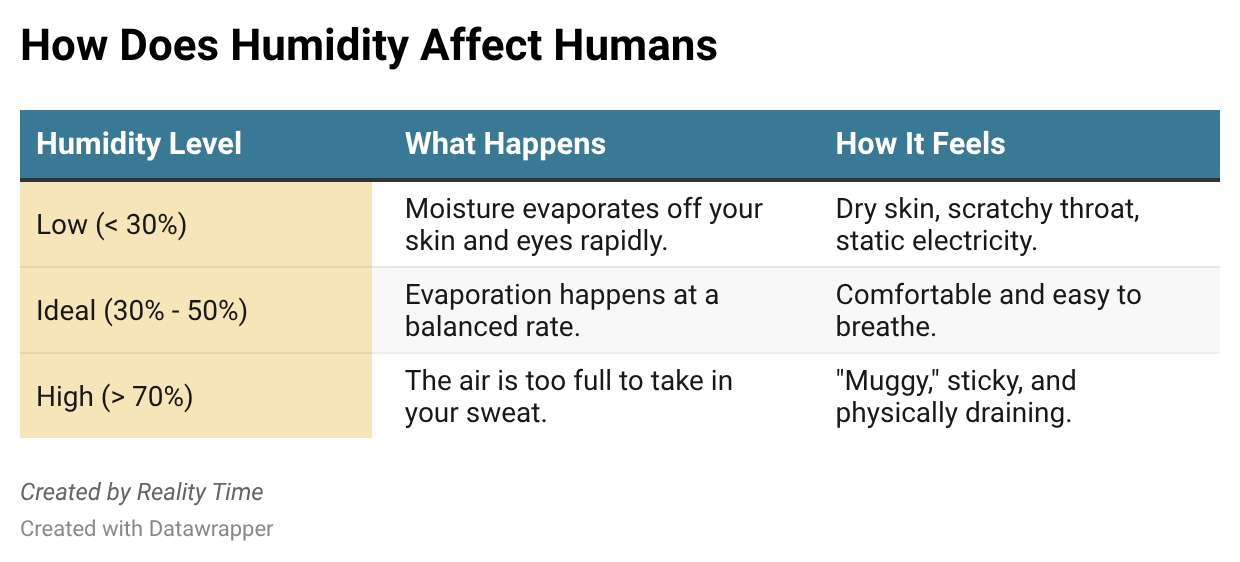
The metabolism in our bodies produces heat, and sweating is one way we get rid of this heat. It requires heat to convert liquid water to water vapor, thereby cooling us. When the humidity is high, the water won’t evaporate, we can’t cool ourselves, and we feel hot.
How Does Humidity Affect Plants?
Just like humans, plants “breathe” and regulate their temperature through moisture exchange. While we sweat, plants undergo a process called transpiration, where they release water vapor through tiny pores in their leaves called stomata.

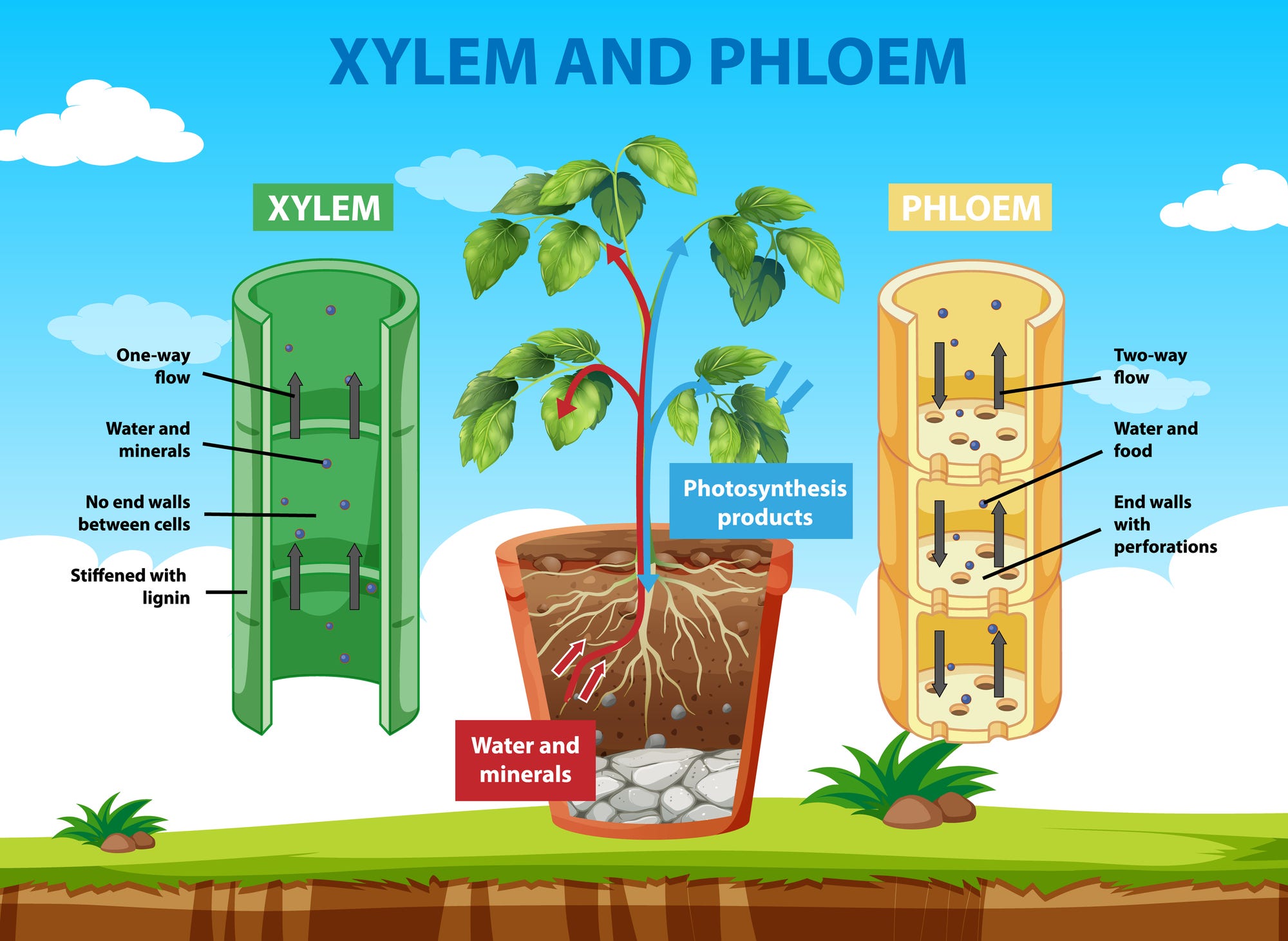
Plants also have another reason for releasing water. They move water and nutrients from roots to leaves using the Xylem. Once in the leaves, the water needs to be expelled so that more water can move up from the roots.
When humidity levels are too high, water has difficulty evaporating through the stomata, stopping the whole process.
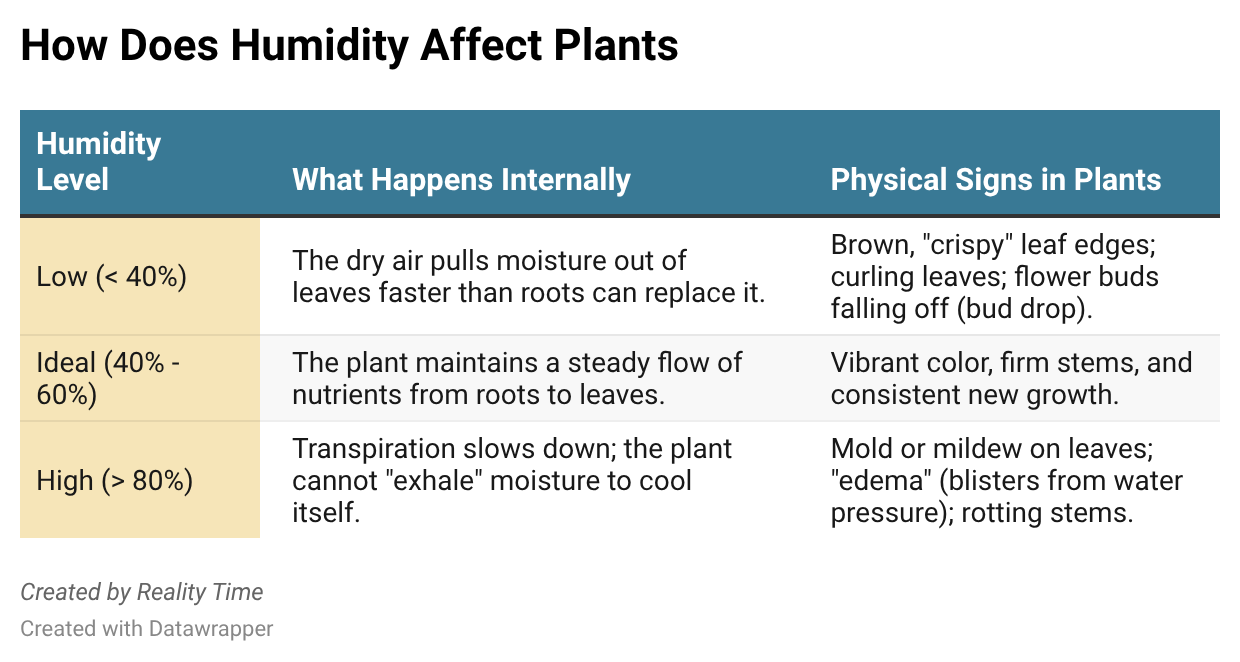
The ideal humidity level for plants is around 50%, which is about the same as for humans.
Condensation on Windows
There is another reason for keeping humidity levels lower in winter. When humidity gets above 50%, water vapor condenses on cold windows in winter, which is not good for your home. To balance the condensation problem, with the needs of plants and myself, I try to keep our humidity at 45% to 50%.
Keeping Humidity High for Plants
During winter in cold climates, it is common to see humidity levels in the 10% to 20% range, which is too low for plants and can cause the following problems.
- Brown edges on leaves
- Wilting plants
- Leaves turning yellow
- Foliage dries out and becomes crispy
- Spider mites
The solution to these problems is to increase humidity, and gardeners have developed a number of solutions. Unfortunately, most don’t work very well.
Misting Plants
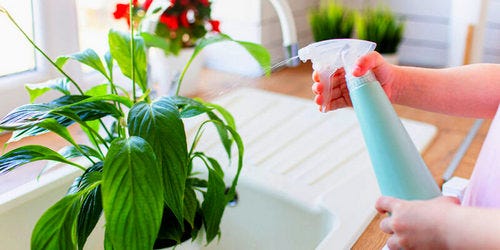
Misting does increase humidity around the plant. But for how long?
When the mist lands on the plant, it sits there as water droplets. Over time, this water evaporates into vapor and spreads throughout the room. Gases don’t stay put. Once the droplet is fully evaporated, the humidity around the plant quickly drops to the level of the whole room. A little misting does not change the humidity in a normal-sized room.
The time it takes to evaporate the droplets depends on the droplet size and the room humidity. It evaporates faster at low humidity. In a dry winter home, you will be lucky if it lasts 15 minutes. That means you need to mist every 15 minutes to keep the humidity high around the plant. Who is going to do that?
Misting can also cause fungal growth on some plants.
Unless you are growing some special plants like air plants, misting is a complete waste of time.
Pebble Trays
One of the most common recommendations for increasing humidity around plants is the pebble tray.
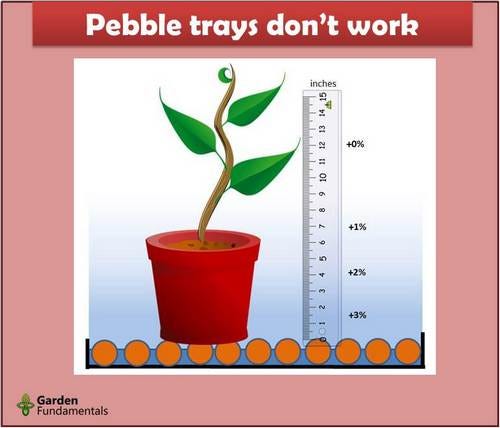
I learned this was a complete myth 40 years ago when I started growing orchids, but it is still promoted today.
Water does evaporate from the pebble tray and increases the humidity right above the water. Once the water is in the form of a gas (water vapor), it quickly moves away from the pebble tray, in all directions, by a process called ‘diffusion’. The water molecules spread out throughout the entire room, and if the door to the room is open, they spread throughout the whole house. The amount of water added to a room from a pebble tray is so small that it does not change the humidity of the room. The humidity a few inches above the pebble tray is the same as the whole room.
The same thing happens when you cook or have a shower. The humidity from the steam does not stay above the stove or in the shower. It quickly moves into the rest of the house. Long before dinner is over, the humidity above your stove has disappeared.
This change in humidity above a pebble tray was tested by an orchid enthusiast. The numbers he found for humidity increase above the try are displayed in the above image.
Increasing humidity by 1% or 2% at plant level has no significant effect on plants. Pebble trays don’t work.
The Baggy Method
This method is quite simple and does work well. You simply place the plant into a plastic baggy and seal it up. You would not put most plants in this situation, but it works well for some special cases.

- Leaf Cuttings: This is a great method for starting something like African violet leaves or Streptocarpus leaves that want 100% humidity until they root.
- Stem Cuttings: Standard softwood or semi-softwood cuttings are placed into soil and put into the bag for 100% humidity until they root. In this video, I’ll show you an even better method.
- Small Seeds: Very tiny seeds are normally sprinkled on top of the soil, and they need high humidity until they germinate. The baggy method is great for this. I use it all the time to germinate Streptocarpus seed as well as other small-seeded perennials.
Once the leaf roots or the seed germinates, you should open the bag to reduce humidity. I usually open it a bit, but keep it mostly closed for a few days. Then open it more for a few days. Then roll it down halfway for a while, and finally remove the bag completely.
I know this process slowly reduces the humidity, but I have never seen data to show how much it actually reduces. So I ran some tests.
A pot was filled with soil, it was watered, and placed in a closed baggy. Humidity was measured in the closed bag as well as at various stages of opening it. It was left for several hours at each stage to make sure the humidity reading had stabilized. The conditions in the room were: humidity 46%, temperature 22.9 C.
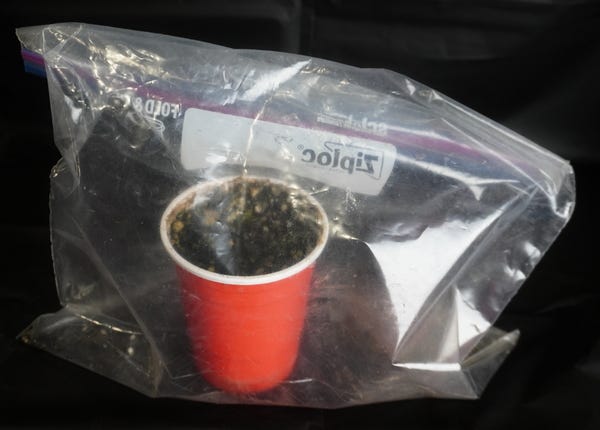
Closed baggy with some water sprayed into the bag using a hand mister. Humidity was 94%.
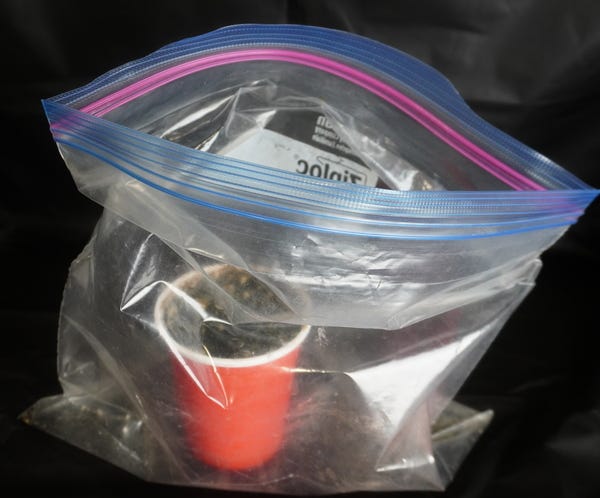
The open bag had a humidity of 78%.
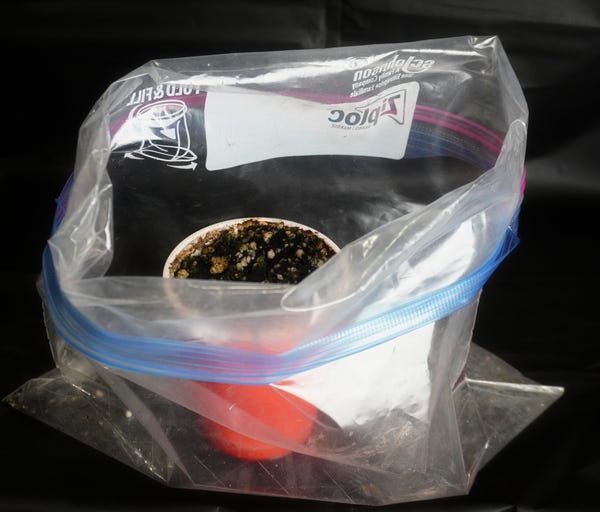
Once the bag was open and the sides were rolled down about halfway, the humidity dropped to 55% over 24 hours. I then added a bit of water to the bottom of the bag, and the humidity was 66% by the next day. The moisture in the pot alone was not enough to keep the humidity significantly above the room’s humidity.
Place Plants in a Humid Room
Bathrooms and kitchens tend to be a bit more humid, and some suggest placing plants there. How beneficial is this? Right after a shower, the bathroom is humid, but unless you close the door to trap that humidity, it soon dissipates into the rest of the home, and modern homes have a system for pulling out the humidity even if the door is closed. Kitchens are similar. They get humid around meal time, but they are dry the rest of the day.
This suggestion may work in some cases, but I suspect it makes little difference.
Crowded Plants Increase Humidity
Putting all your house plants in one spot can be effective. Each plant transpires water out of its leaves, creating a higher humidity layer around the leaves. When several plants are growing close together, they can generate enough water to keep the area more humid. Unless you have a lot of plants or a small room, this effect will be limited.
But even if this method does not work great, it is still a good reason to buy more plants 🙂


