
Are you looking for an unusual subshrub for the fall garden? Elsholtzia stauntonii is a good choice. The Chinese mint shrub is rare in northern gardens, where its late flowering is very much appreciated.


Are you looking for an unusual subshrub for the fall garden? Elsholtzia stauntonii is a good choice. The Chinese mint shrub is rare in northern gardens, where its late flowering is very much appreciated.
GardenMyths.com started 3 years ago (September 2012), and to date I’ve had about 600,000 visitors, with 75% of those coming this year. Thank you to everyone who frequents this blog.
This post will be different than my normal post. Today, I’d like to show you my garden, Aspen Grove, as well as announce some new initiatives that have been started – Garden Myths has a baby brother and sister!

Plant nutrient is a term used to describe plant food. We all know compost is good for the garden, but most of the good stuff in compost is not ready for plants to use – it is not plant nutrients yet! Over time, the complex molecules in compost, like proteins and carbohydrates, will be broken down by microbes into smaller molecules and eventually they become nutrients.
In this post I will take a close look at the main nutrients used by plants. What are they? What happens to them in soil? The answers to these and other questions will help you understand the process of fertilizing plants better.

A lot of the stuff on the internet is garbage when it comes to gardening advice. I am not surprised about that since many people just repeat what they have heard and give it very little thought. Some garden writers don’t actually do much gardening – they are writers, not gardeners. I rarely believe information unless it comes from experts in a field, government sites or published research articles.
This post is about an information guideline on fertilizers and soil amendments which is published by a government source – one you should be able to trust. Unfortunately it is full of incorrect or misleading advice. Let’s have a look at some fertilizer gardening myths.

We eat 3 times a day and the food we eat provides all of the nutrients we need to live. The chemicals in food are used by our bodies to grow and maintain our body parts. The protein you eat helps build muscles. Carbohydrates provide energy that is used for all kinds of things such as moving, breathing, thinking and eating more food.
Most of the food we eat is in the form of large molecules such as protein, carbohydrates, DNA, and fats. Our digestive system takes these large molecules and breaks them down into smaller molecules like simple sugars and nitrates. Our bodies then use these small molecules as building blocks to build new large molecules. Our bodies are actually a very efficient recycling plant. We take food in, break it down into basic building blocks, and then use these building blocks to create complex body parts.
Plants differ from humans and other animals in that they do not have a digestive system. Therefore, they are not able to break down large molecules. Plants must start with small molecules like nitrate and phosphate and build the large molecules they need.

Most references say that the NPK values indicate the % nitrogen, % phosphorus and % potassium. They say this, not because it’s true, but because it makes it simple to explain fertilizer concepts to the general public.
What does NPK really mean?


Aconitum x cammarum ‘Bicolor’ is a special summer blooming monkshood. In zone 5, it blooms mid to late August at a time when other plants are slowing down. It can grow in full sun or heavy shade making it ideal for almost any garden.
The advice to add egg shells to the garden or compost pile is very common. In my last post I looked at some evidence that suggested eggshells do not break down in a compost pile or in soil – at least not very quickly. The one exception where eggshells do break down is very finely ground eggshells added to acidic soil .
How quickly do eggshells break down in soil? Is it 6 months or 5 years? Maybe it’s 100 years? No one seems to know. In this post I will describe a 6 year study that has been started to find out if eggshells decompose in that period of time.

It is fall and some gardeners are getting tired of their gardens. So what do they do? They go out and buy bulbs for spring flowers. For a true gardener there is always next year.
This post will walk you through the steps of how to buy bulbs and how to plant bulbs for a great spring garden.

Lots of people add eggshells to the garden or compost pile. It is claimed that they add important calcium to the soil for plants. Is this true? How well do they decompose? What happens to them in a compost pile? Do they add any value to the garden?

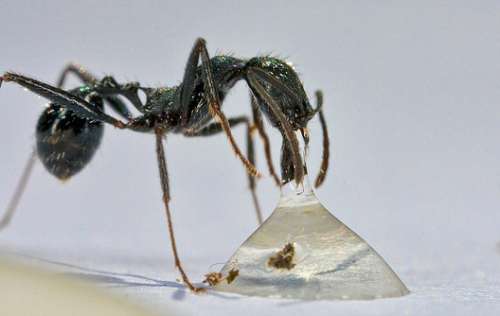
Ants seem to be everywhere this year, and many people want to get rid of them. A recommendation I found on social media was to place mint leaves near the hill, and the ants would quickly leave. Apparently the smell of the mint leaves is just too much for them. This seems a bit far fetched, but it is easy to test.
Garlic is one of the easiest vegetables to grow in the home garden, and if you grow too much, it easily keeps all winter long. Plant some today.
