

I have been growing Streptocarpus for several years, doing a lot of breeding to develop new cultivars. A couple of years ago, I got a seedling that was a stable peloric. Its offspring have now flowered, and I have several pelorics. These are a bit more common in Europe, but few people seem to be breeding them in North America, so I decided to start a breeding program for them.
The purpose of this blog post is to document both my journey and the information I find about breeding peloric streptocarpus, which seems fairly limited.
Key Takeaways
- Peloric streptocarpus are interesting mutations.
- Little is known about their breeding.
What is a Peloric Flower?
The official definition is as follows: A peloric flower is an abnormal, spontaneous mutation in plants where a normally bilaterally symmetrical (the left and right sides of the flower are mirror images of each other) flower develops multiple axes of symmetry, also called radial symmetry (a type of balance where the petals are arranged evenly around the bloom’s center).
In simple terms, a peloric flower is one where each petal is the same, and you can draw several different lines through it to divide it into equal halves.
The claim that it is an “abnormal, spontaneous mutation” is correct when you compare such plants to wild species, but the flower form can be quite stable for a particular cultivar. For example, most cultivated florist’s gloxinias (Sinningia speciosa) are peloric, while the original species are not.
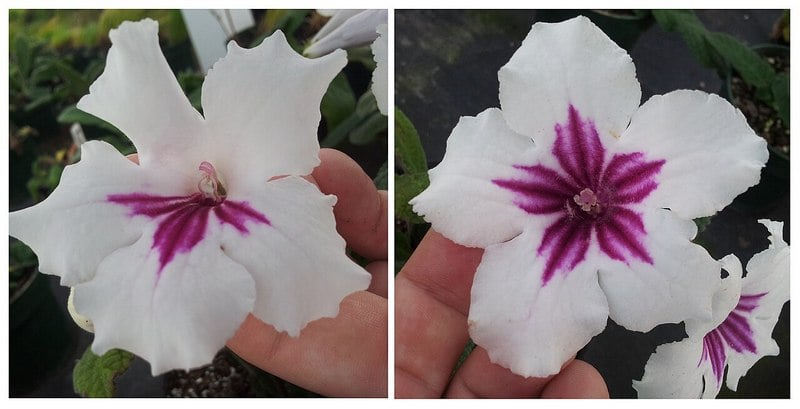
The above picture shows two Streptocarpus flowers on the same plant. The one on the left is a normal flower. It has two upper petals of a similar type and three lower petals of another type. The only way to divide this flower into equal parts is with a vertical line. The flower on the right is a peloric flower, where all 5 petals are the same. This flower can be divided into equal halves 5 different ways.

You can see my collection of Streptocarpus plants here. I also sell plants, leaves, and seeds.
Peloric flowers also exist in other types of plants, and I have documented a peloric foxglove in my garden.
Other Characteristics in Peloric Streptocarpus Plants
My peloric plants also have several other characteristics that differ from those of regular plants. I am not sure if all peloric streptocarpus have these?
- Upright-Facing Flower: The flower faces upward rather than the usual side-facing or downward-facing orientation.
- Ring of Stamens: The stamens are larger than normal and form a tight ring around the pistil. This is especially distinct on newly opened flowers. Over time, the anther shrinks, and the effect becomes less pronounced.
We Can Learn From the Gloxinia
The gloxinia (Sinningia speciosa) is a gesneriade, like streptocarpus, that was domesticated in Great Britain in the early 19th century for its large, attractive peloric flowers. A good summary of its early development can be found in the journal Gesneriades (2011).
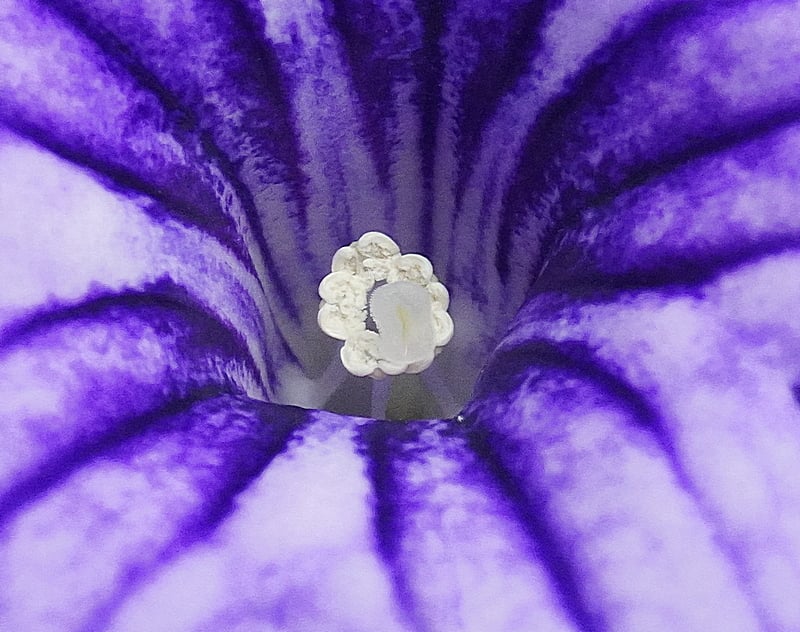
The image below clearly shows the symmetrical form of the flower as well as the more horizontal floral display. You can even see the change in orientation of the stamens.
Since the breeding of gloxinia is well documented, we can use information about it to better understand peloric breeding in streptocarpus.
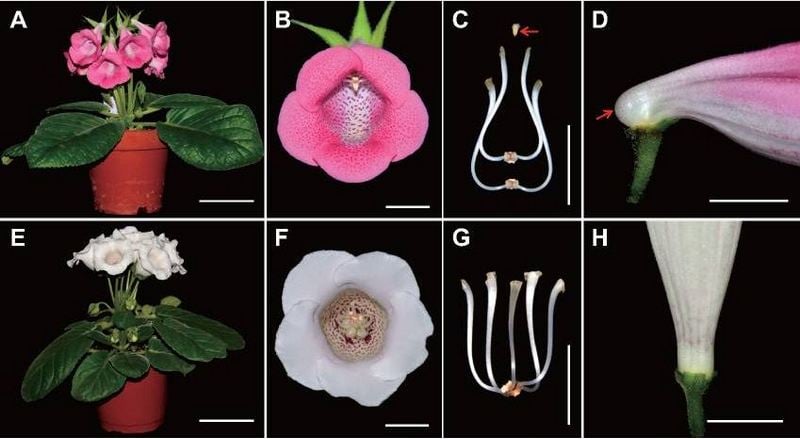
Notice the similarity between the gloxinia and my description of streptocarpus, namely, upright flowers and position of the stamens.
Crossing a wild type with a modern peloric produced 100% wild type flowers. Crossing these seedlings produced about 25% peloric flowers.
Gloxinias and streptocarpus do not interbreed.
Peloric Flowers in African Violets
African violets (AV) are closely related to streptocarpus and also show up as prloric flowers.
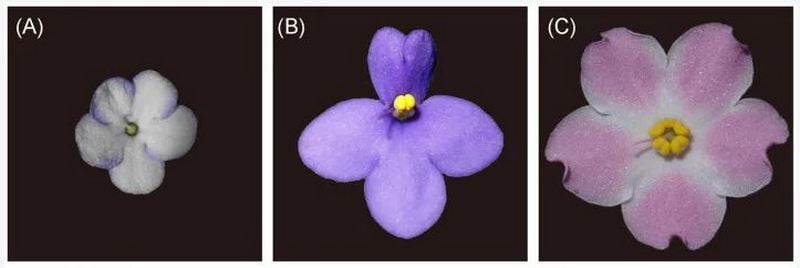
The flower form of AV is similar to Streptocarpus, with two upper petals being different than the three lower petals. Two different types of peloric flowers can occur. All the petals can look like the upper petals as in (A) above, which is known as dorsalized peloria (DA). Or they can all look like the lower petals (C), known as ventralized peloria (VA).
Note that the DA form has very small stamens while the VA form has enhanced stamens.
I assume Streptocarpus can do the same, but I have not seen a reference to a DA form. The peloric forms discussed above are a VA type, showing larger petals and enhanced stamens.
Peloric Flowers in Streptocarpus
I have not found much information about the genetics of peloric streptocarpus flowers.
The following is from Pavel Enikeev (Павел Еникеев), who has done significant breeding of peloric streptocarpus flowers.
Peloric flowers are the result of a mutation that is different than the one found in African violets. “In streptocarpus, peloric flowers arose through changes in the genes responsible for the spatial patterning of the upper petals within the floral meristem. As a result, the upper petals fail to develop, and their positions in the meristem are occupied by petals that develop according to the pattern of the lower petals.”
The mutation affects not only the shape of the petals, but also the number of petals, which can be different than 5.
Note: Pavel links the peloric mutation to the genes that control the size of the meristem. A larger meristem produces more petals; a smaller one fewer petals. I am not convinced petal number is linked to peloric genes. Numerous streptocarpus, which are not peloric, also form flowers with varying numbers of petals. Flowers with 4 and 10 petals are not uncommon, but it is only on one flower. The next bloom will be normal, and it is not transmitted through vegetative propagation of the leaf, which showed the change in petal count.


My Current Collection
I purchased some seed from Renata Dobrowolska, and one seedling turned out to be a stable peloric, named RP150.
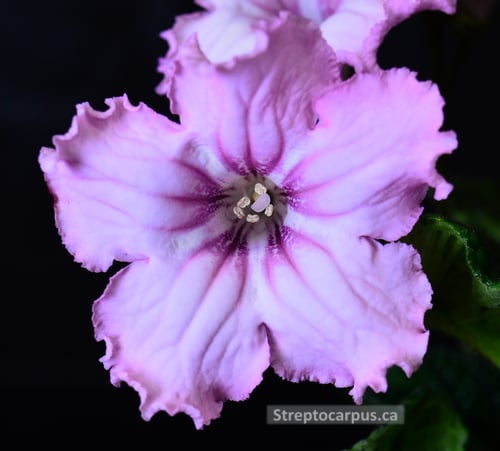
A few other seedlings had occasional peloric flowers, but they mostly produced normal flowers. The RP150 clone consistently produces peloric flowers.
Seed from RP150 did not produce peloric plants, but it did produce a non-peloric, RP268.
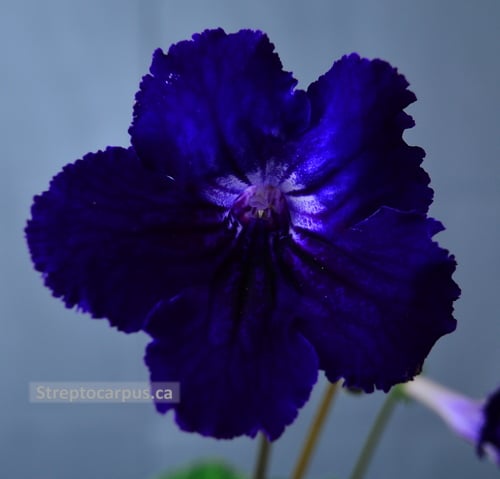
RP268 is a very nice, large flower, and the plant produces flowers continually all year long. It also tends to self-seed a lot and regularly produces seed pods. These seeds produced a lot of non-peloric plants, but they also produced a few stable peloric seedlings. The following are now in my collection.
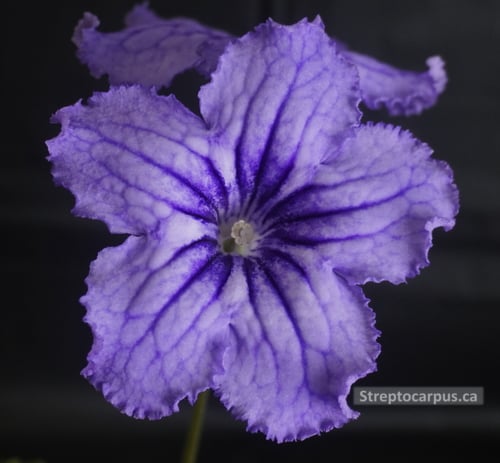
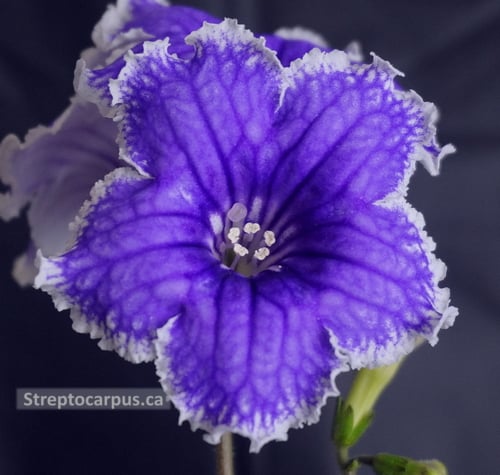
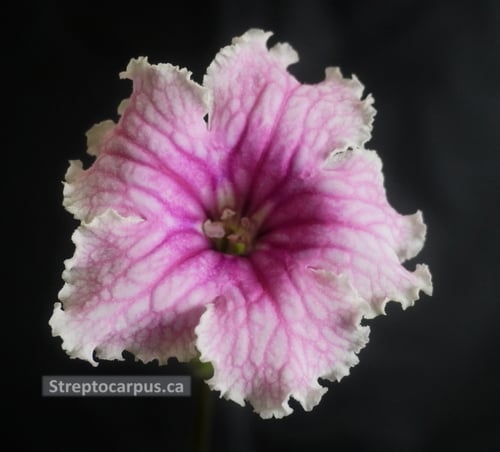
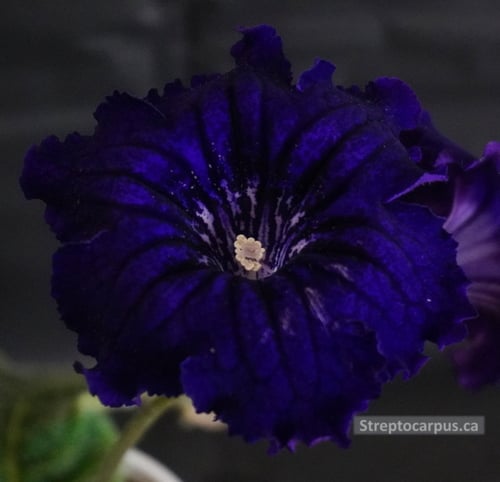
RP387, not consistently peloric. (268S X ?) produced by Robert Pavlis, 2026
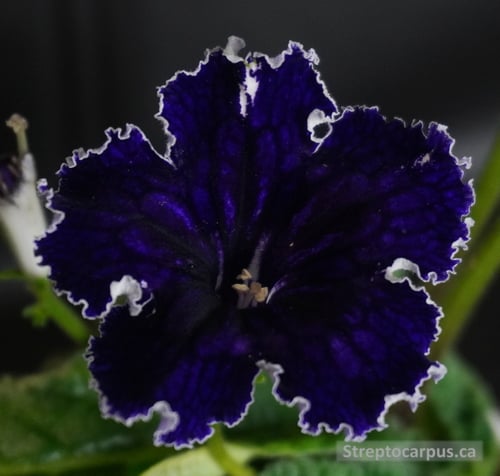
Seedling RP391 seems to be peloric. It is upright-facing and has expanded stamens, but the petals are not all identical in color. The tips have white blotches, which are different on every petal.


For me, it would have been better to explain peloric and non peloric flowers right at the beginning of your article. I grew frustrated reading and not knowing what I was reading, until quite a bit into the article!
Valid point – but there is a table of content at the beginning of the article.