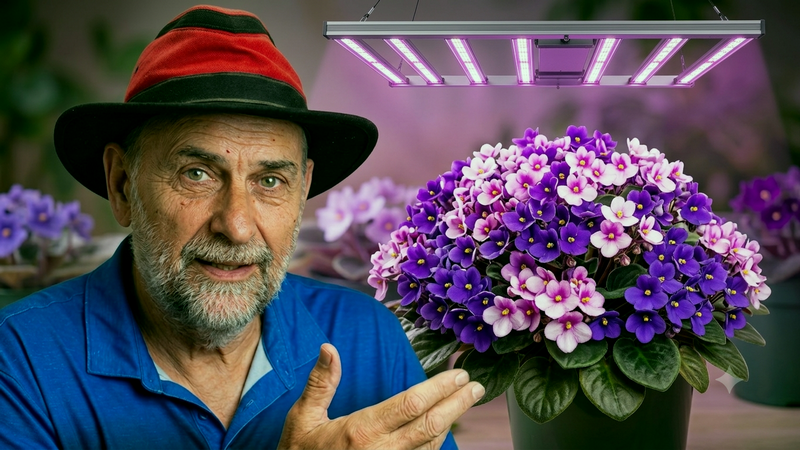
Growing African violets under lights allows you to control the amount of light the plants receive by changing the type of light, the distance between the plant and the light, and even the duration of light used. But how much is the best amount of light for growing and flowering African violets?
I decided to dive into the research to see what the experts say.
Key Takeaways
The best light level for African violets is 10,000 lux with a DLI of 8.
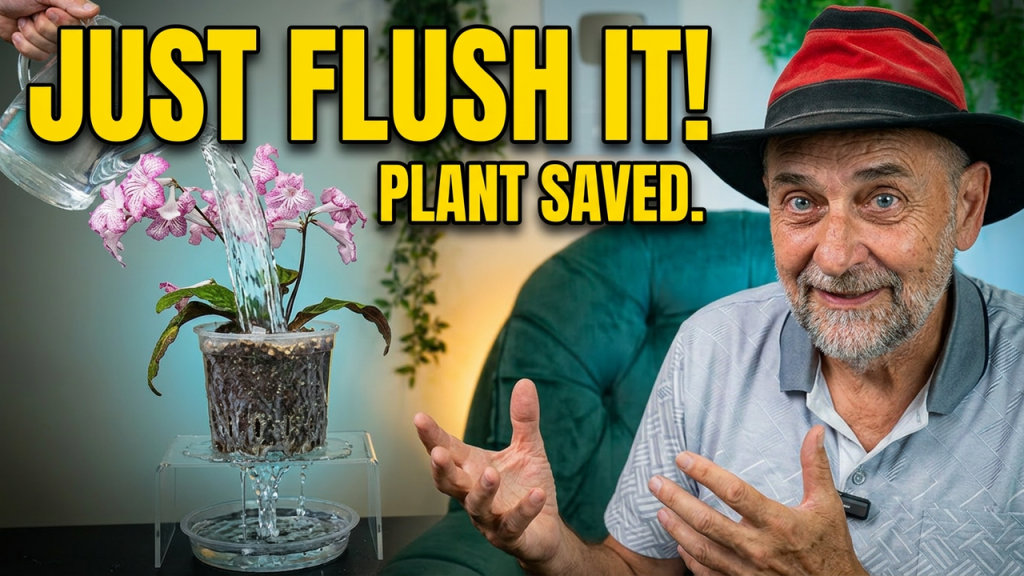
I have been growing houseplants for 50 years, and flushing is a critical step in the process. It makes plants grow better, it solves issues with hard/alkaline tap water and it reduces the number of times you need to replace potting media. So it saves money. Will it harm plants? If done correctly, it can’t possibly harm your plants.
African violets have been grown for many years, and I have been growing them more. They are very similar to my streptocarpus and require almost the same care. Unfortunately, the large interest in the hobby has resulted in several myths. Here are the ones I have identified so far.
Streptocarpus normally have 5 petals, two upper ones and three lower ones. In many cultivars and most species the color of both the upper and lower petals are the same, or at least very similar. Some newer cultivars are known as “bicolors”. In these plants, the upper petals have one color scheme and the lower petals have a different one, hence the name bicolor. This blog post details the origin of the first bicolor streptocarpus and documents some other special characteristics of bicolors.
Streptocarpus ‘Silvia’, bred by Bent Møllegaard Nielsen. Source: Pavel Enikeev
Key Takeaways
Bicolor streptocarpus are popular.
First developed by Bent Møllegaard Nielsen, the owner of Sosted Garden, Denmark.
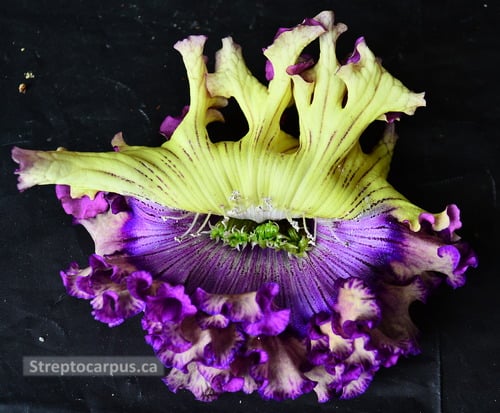
Fasciation is an abnormal growth found in over 100 vascular plant families that forms weird-looking roots, stems, and flowers. The science is not well understood, but citizen scientists can contribute to our body of knowledge.
Become fascinated with fasciation.
Fasciated Streptocarpus flower, Source: Robert Pavlis
I have been growing Streptocarpus for several years, doing a lot of breeding to develop new cultivars. A couple of years ago, I got a seedling that was a stable peloric. Its offspring have now flowered, and I have several pelorics. These are a bit more common in Europe, but few people seem to be breeding them in North America, so I decided to start a breeding program for them.
The purpose of this blog post is to document both my journey and the information I find about breeding peloric streptocarpus, which seems fairly limited.
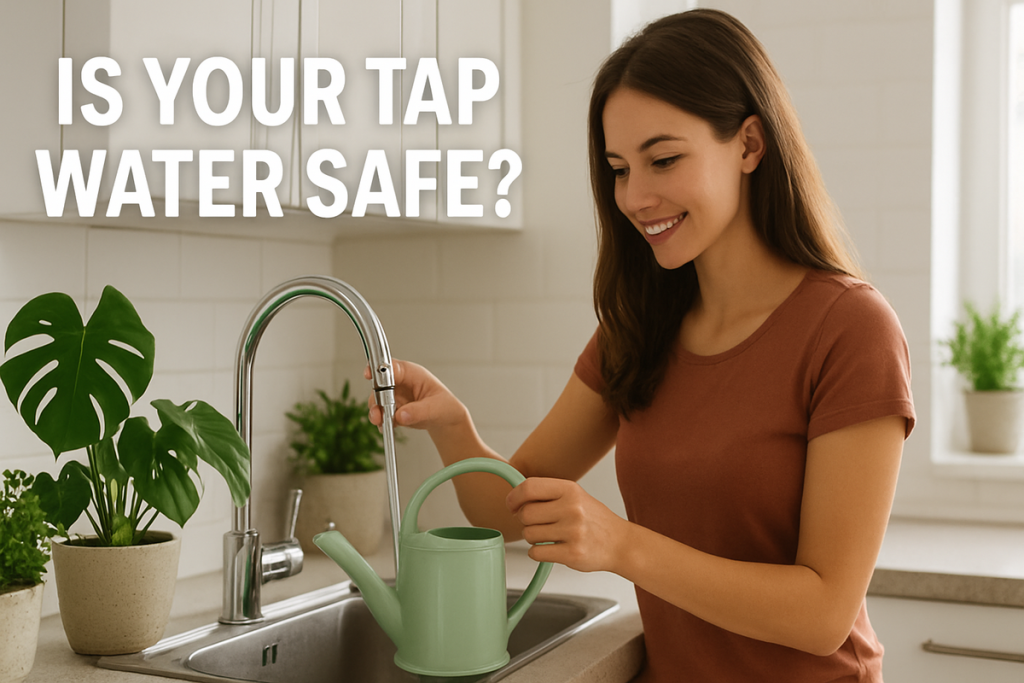
I see a lot of online comments from people who feel their tap water isn’t suitable for plants. People are moving towards distilled, RO water, or rainwater instead. Is this necessary? Is your tap water a problem?
The following are some concerns people have.
Chlorine
Fluoride
pH
Hardness (high calcium and magnesium) & alkalinity
Sodium
Water Softener
Lead
Tap water is rarely a problem for outdoor gardens growing in real soil, but it can be a problem for houseplants and plants growing in soilless mixes, and that is the focus of this post.
Humidity is a form of water, and water is critical for plant growth. We can all sense high and low humidity, but what effect do these extremes have on plants? How does a gardener control humidity to help plants grow well?
Let’s clarify the misunderstandings and myths about providing humidity for plants.
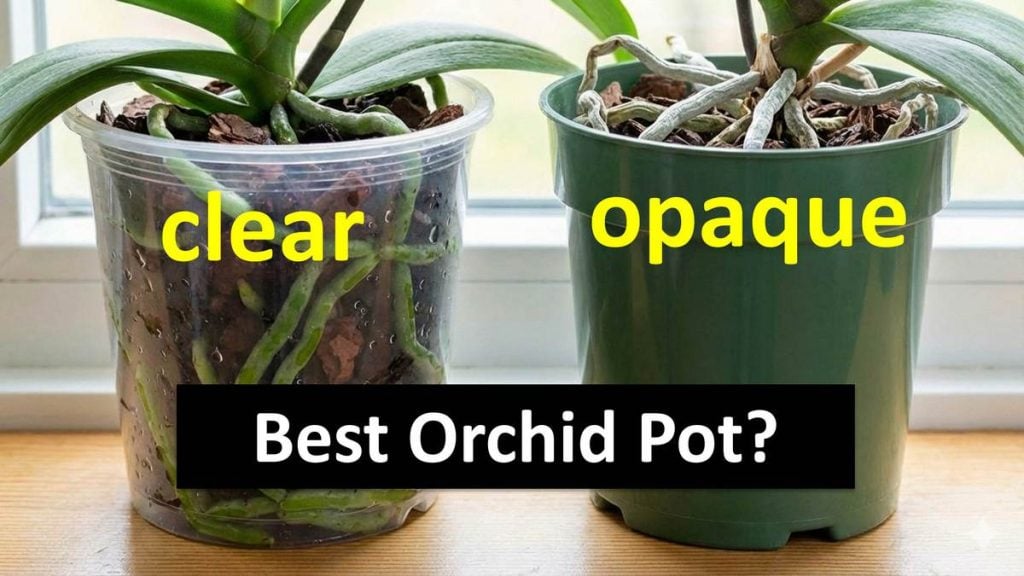
I have been growing orchids for over 40 years, and at one point, I grew over 1,000 orchids. Whenever I was asked about the best orchid pot, I responded with the same answer. Any green plastic pot will work just fine. If it had a raised bottom with drainage holes at the bottom rim (azalea pot), to allow better water drainage, that would be better, but any pot will work.
That answer is still correct. We know that because most hobbyists use that kind of pot.
However, there is some new research that suggests a clear pot may be better. Let’s have a look at what the new science says.
The clear pot on the left shows green roots that photosynthesize. The roots on the right are a slivery-white color because they are dry.
Key Takeaways
Opaque has been the standard for many years and still works great.
New science says there are some benefits from clear pots.
Plant identification apps for phones and tablets have become very popular, but they are not all created equally. In this article, I will compare 7 popular apps to see which ones perform best.
It used to be very common to add drainage material, such as rocks, Leca, or clay pot shards in the bottom of pots for added drainage. Then it was claimed that this is a myth and it does not work. But then some new science this year upsets everything by showing drainage material may actually work.
Should a gardener use drainage material? What kind of material works best?
Leca being added to the bottom of a pot of succulents, source: Depositphotos
Key Takeaways
Drainage material reduces the water in the soil.
It is best not to use drainage material in most cases, but it can be useful in the right situation.
Watering may be the hardest part of growing streptocarpus well. Not because they are difficult to water but because there is a lot of confusion and misinformation about their care. The goal of this post is to describe some watering experiments and provide clarity about watering.