
Globularia repens is an uncommon alpine that is perfectly suited to the rock or scree garden. It spreads fairly quickly for such a small plant and makes a nice cushion display.

Globularia repens is an uncommon alpine that is perfectly suited to the rock or scree garden. It spreads fairly quickly for such a small plant and makes a nice cushion display.
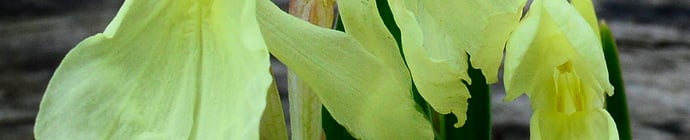
Are you interested in an easy to grow exotic orchid for your garden? Roscoea cautleyoides isn’t a real orchid but the flowers sure look like one.
In a previous post I described the right way to plant a tree or shrub. If you follow that process, you will have success most of the time. Today, I’d like to look at a new method for treating trees before planting: washing and pruning roots.
Science does not stand still. Tree researchers are continually looking at ways to improve the planting process, and in recent years a new way of handling the tree roots has come to light. It goes against everything that makes common sense, but it could have some benefits.

I was working on my new book, Plant Science for Gardeners (to be released spring 2022), and came across a claim that most beans twine anti-clockwise, but that runner beans (Phaseolus coccineus) twine clockwise. This claim was on a government extension site, so it just might be true. It seemed really odd to me, but why would someone make this up? Surely this is something that is easy to check?
I have been growing runner beans for many years but I decided not to plant any this year so I couldn’t even check my garden.
There are also claims that plants, including beans, twine differently in the Southern and Northern Hemisphere. The idea that water drains in a different direction in the south is a myth, so what about twining vines?

Growing marginally hardy or non-hardy plants in cold climates usually involves growing them in containers and moving them indoors before winter. Everyone loves to see houseplants flourish when grown outside during warmer months – but no one likes bugs hitchhiking back inside! Fortunately, there are ways to remove unwelcome insects before they enter your home.


I have grown Alyssoides utriculata for a number of years and I never see it mentioned in discussions. It really does deserve more attention. It is bright yellow, very easy to grow, seems long lived and makes really unusual seed heads. Consider this one for your rock garden.

Salvia sclarea has been in my garden for over 12 years and it is always a pleasure to see it. It is very fragrant, and makes a nice showing with long lasting flowers.
Who wouldn’t want a green dragon in the garden? The problem is that some green dragons are native to North America (Arisaema dracontium) and others are not (Pinellia Pedatisecta). Pinellia is commonly sold as Arisaema dracontium, and since Pinellia is much more aggressive, it can take over native areas after well-intentioned gardeners plant it.
If you grow either of these plants, make sure you know which one you have.
There is nothing wrong with growing Pinellia in North America; just make sure you label it correctly and don’t plant it in wild areas.


Cornus mas is a shrub or small tree that blooms very early in year, even before forsythia. It has attractive yellow flowers followed by red fruit that develops in fall. It does not make a big splash in the garden, but adds a nice touch to a shrub border.

Flueggea suffruiticosa is a rare shrub in gardens that is interesting, but not spectacular, until fall when it turns a beautiful golden color. It is quite architectural, presenting a weeping habit.
There is a lot of information floating around about fertilizing orchids, but much of it is wrong. For example, the whole concept of “orchid fertilizer” is a myth because there is no such thing.
It’s time that orchid growers understand fertilizers better. It will benefit your plants and save you money.

There have been several articles in the past few years that recommend planting trees in square holes rather than round holes. It is claimed that the square holes will result in more root growth into your native soil outside of the planting hole, which is good for proper tree development.
Does this work? Should we all start making square holes to plant trees?
