Air Purifying Plants – Do They Work?

It’s that time of year again, winter is coming. We close the windows and doors of our home to keep out the cold, and in the process, we lock in all kinds of chemical pollutants. Never fear, a few air-purifying plants will help with that problem. This must work since all kinds of home magazines, newspapers, and websites tell you it works. Headlines like “the 10 best plants for removing pollutants in your home” appear daily this time of year. How well do plants work at cleaning the air in our home?

Air Purifying Plants
Air Purifying Plants – Do They Work?, source: Spaceo

Read More

If you like this post, please share .......

Rodgersia Identification Simplified

Rodgersia is an exceptional plant for the garden. They are true giants that will make a statement that your visitors will remember for quite some time. The problem with this genus is that the species are fairly similar to one another, resulting in many misidentified pictures on the internet.ย  In this blog post, I hope to provide a simple way to help you identify your plants.

Rodgersia podophylla 'Pagode'
Rodgersia podophylla ‘Pagode’, by Robert Pavlis

Read More

If you like this post, please share .......

Amsonia Identification and other Amsonia Mysteries

The genus Amsonia is a collection of herbaceous plants that are not well known in gardens, but they should be more popular. They are great plants, flower well, are North American natives and some are very drought tolerant. They are also more cold tolerant than believed. The various available species are similar and very often misnamed. It is quite common to find pictures in books and on the net that are misidentified.ย  In today’s post I will try to sort out the differences to help you identify plants.

Amsonia 'Blue Ice'
Amsonia ‘Blue Ice’ by Robert Pavlis, GardenMyths

Read More

If you like this post, please share .......

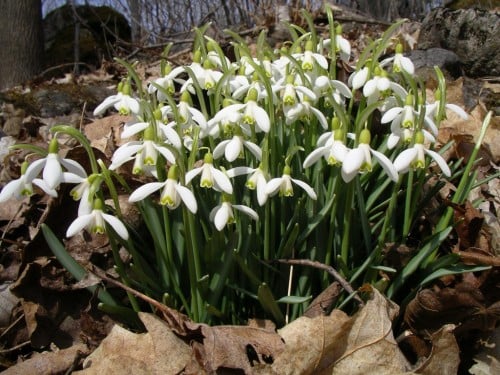
Snowdrop – Should They be Transplanted ‘in the Green’?

Snowdrop, Galanthus nivalis and other Galanthus species, are one of the best spring flowering plants. The common advice given for transplanting them is that it should be done ‘in the green’. Transplanting in the green means transplanting snowdrops right after flowering, while the leaves are still green.

I suspect that this myth has been handed down for many generations, but it is not based on fact. Lets have a closer look.

Snowdrop, Galanthus nivalis
Snowdrop, Galanthus nivalis, by Robert Pavlis

Read More

If you like this post, please share .......

Pruning Shrubs at the Right Time

The standard advice is to prune spring flowering shrubs right after flowering and to prune summer flowering shrubs in winter or early spring. Is this the best advice?

Pruning spring flowering shrubs after flowering ensures that the shrub has time to develop next yearโ€™s flower buds. Summer flowering shrubs develop flower buds in spring on new wood so they are pruned before flower buds are formed. This is not bad advice for maximizing flower production, but is it the best advice for the vigor of the shrub?
Pruning Shrubs - Cotinus coggygria โ€˜Graceโ€™
Pruning Shrubs – Cotinus coggygria โ€˜Graceโ€™, by Robert Pavlis

Read More

If you like this post, please share .......

Growing Baptisia australis from Seed

Baptisia australis (false indigo) is known to be difficult to grow from seedlings. Several sources report that plants die during the transplanting and subsequent maturation process. Today’s post reports on my success rate for maturing these seedlings.

In a previous post I reported on a research project to determine the best way to germinate Baptisia australis seeds.

germination of baptisia australis seed
Germination of baptisia australis seed

Read More

If you like this post, please share .......

Identifying Plants can be Tricky

I had a garden open house yesterday for a local gardening group. It was a beautiful day and I was enjoying the visitors, or at least I was until one of them mentioned that I had the dreaded โ€˜dog strangling vineโ€™. News to me! I have never had it before. I asked to see it and a few guests followed us to one of my clematis arbors. They pointed to evil villain.

I smiled and told them that this was a precious seedling I had grown a few years ago. I thought I had lost it during the winter, but luckily it survived. It even flowered with very small dark red/brown flowers. I mean very small! It was now making seed pods โ€“ nice long slender pods. I was very proud of my plant.

Cynanchum louiseae
Cynanchum louiseae – Dog Strangling Vine

Read More

If you like this post, please share .......

Invasive Plants You Should NOT Buy

You are at the nursery and have found a nice-looking plant. Is it safe to bring home? Your friend has some extra plants and offers to give you some – should you take them? In both cases, you can get into a lot of trouble by taking the plant home.

This is a list of invasive plants you should never, never, never add to your garden–unless you want them everywhere.

Nurseries should be restricted from selling them to unsuspecting customers.

See also Products You Should Not Buy!

Read More

If you like this post, please share .......

Castor Beans – Are They Poisonous?

I was giving a talk at a local Master Gardner meeting the other day and I mentioned that castor beans contain one of the worldโ€™s most deadly organic compounds. Someone in the audience commented that you can actually eat several castor beans and you would only get a mild stomach ache.

These two points of view seem to contradict one another. What is the real story?

Castor beans, caster bean plant, Ricinus communis
Castor beans, Ricinus communis

Read More

If you like this post, please share .......