When the leaves of a plant wilt it is a sign that the plant needs water, and therefore it is a good time to water–right? Maybe. The plant might need to be watered, but it is also possible that water will harm the plant.


When the leaves of a plant wilt it is a sign that the plant needs water, and therefore it is a good time to water–right? Maybe. The plant might need to be watered, but it is also possible that water will harm the plant.
In a previous post I discussed wrapping a tree to keep it warm. I looked at the physics and concluded that wrapping a tree, or any other plant, does not keep it warm. I had never seen any data to support this position, but it certainly follows basic laws of physics. I decided that this winter I would measure the temperature under a wrapped evergreen.

If you are interested in making compost you will soon run into products called compost boosters, or compost starters. What are they? Are they necessary? Do they work?

I just got my favorite gardening magazine and a reader asked the question, “The leaves of my roses are yellowing but the veins are green. What causes this?” The given answer is, “This is called chlorosis and is caused by a deficiency of iron”. The answer might be true, or it might not be true. It is certainly an incorrect statement. Find out the truth about chlorosis.

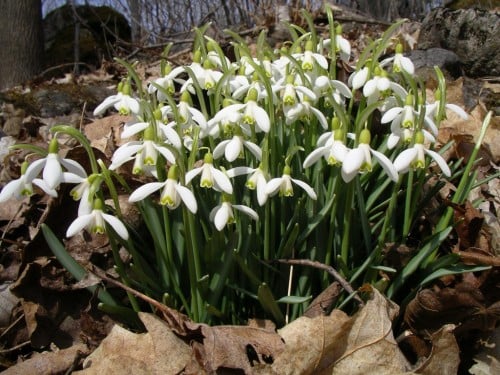
Snowdrop, Galanthus nivalis and other Galanthus species, are one of the best spring flowering plants. The common advice given for transplanting them is that it should be done ‘in the green’. Transplanting in the green means transplanting snowdrops right after flowering, while the leaves are still green.
I suspect that this myth has been handed down for many generations, but it is not based on fact. Lets have a closer look.
Rock phosphate is a recommended phosphorus fertilizer that adds phosphorus to your organic garden. As one web site says, it breaks down slowly but you have time–don’t you!
Is rock phosphate good for your plants?

The standard advice is to prune spring flowering shrubs right after flowering and to prune summer flowering shrubs in winter or early spring. Is this the best advice?

Slugs in the garden can be a huge problem and apparently copper is a good slug repellent. If you encircle your plants with copper tape, it will keep the slugs out. It must work – since there are a number of copper tape products on the market designed to get rid of slugs. But does this really work?

Powdery mildew is a very common infection on plants, and most books that discuss plant diseases will discuss this one. But do the suggestions for reducing the disease work, or are they a myth?

Landscape fabric, weed barrier and weed barrier fabric are names for the same product. It is a black mesh type of plastic that is used extensively in landscaping to keep weeds out of your garden. Does it keep the weeds out? Does it let water through to the plants? Lets have a look at the effectiveness of landscape fabric.

Fish fertilizer is very popular. It is reported to be a good source of nutrients and a good source of proteins, amino acids, and oils—for your plants. Can plants use fish proteins and oils? Is fish fertilizer a good source of nutrients?
Before I go any further, let me say that there is nothing wrong with using fish fertilizer. It will help make your plants grow. I have two problems with fish fertilizer: it is extremely expensive compared to other sources of fertilizer, and many of the claims for it have no basis.

Vitamin B1 is that miracle drug that makes all plants grow bigger especially after transplanting. It is added to several different kinds of fertilizer and plant additives. Guess what – it doesn’t work. Photo Source: Farmer Fred Rant The history of this myth is quite interesting and told in detail here. In 1930 a scientist … Read More