

GMO food labeling compliance became mandatory starting June 23, 2025, but if you look at the label on processed food in the US, you won’t see a GMO label.
The reason for this is that the FDA has decided to use a different term. The food will be labeled as “Contains a Bioengineered food ingredient”. The word Bioengineered (BE) is replacing the term GMO.
The general public has been asking for GMO labeling on food for many years. After spending many millions of dollars, they now have their wish.
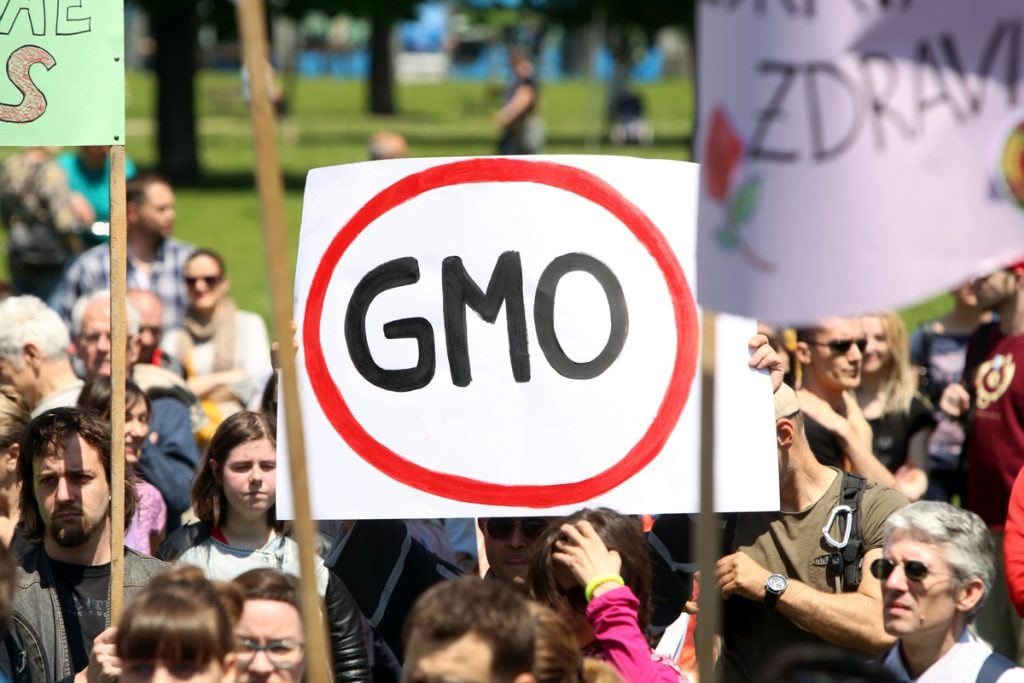
Key Takeaways
- USA now labels GMO food.
- GMO is now called “Bioengineered”
Why Did the FDA Change GMO to Bioengineered (BE)?
Anti-GMO groups were quick to point out that the government should not have changed the term, because it just adds confusion for the consumer. In some ways, that is correct, but it also adds clarity for the consumer.
I have written about GMOs in GMO Myths – Understand the Truth About GMO Plants, where I detail the meaning of the word GMO. I’ll let you read that to get the details, but in essence, the word GMO was never properly defined, and it’s used in many different ways by the public. It is a confusing term.
The reality is that almost no consumer can define GMO.
The term was originally coined to describe a specific lab procedure for adding DNA into an organism. We now have several new ways to add DNA into an organism, such as CRISPR, and using the term GMO would not include such techniques. In fact, many newer genetically modified foods will be developed using newer techniques and would not be GMOs.

The term GMO is also far too vague to be of much value to the food industry and would cause all kinds of issues in the courts. The FDA decided to use a newer term that was not used much by the general public, while at the same time defining it properly. It is also a different term from the one the EU uses.
I think it was the right thing to do.
How is Bioengineered Food Defined?
The National Bioengineered Food Disclosure Standard, or NBFDS, is responsible for developing the labeling requirements for genetically modified food.
Before I define BE, let me define another important term, “event”.
An event is the result of a single, successful insertion of a foreign gene or part of a gene into a specific location on a plant’s chromosome. An event essentially defines a specific genetic modification. It receives an ID, a description of the gene or DNA sequence, and the location in an organism. The NBFDS will maintain lists of these.
This example will help illustrate the key points. Two different strains of herbicide-tolerant corn might be modified with the same gene, but have it inserted at two different locations in the genome. In that case, they are considered two separate, distinct events, and each one would be assigned a different ID, such as MON 810 or GA21. Regulators (like the USDA and EPA) require individual data and approval for each unique event before it can be commercialized.
The NBFDS defines a Bioengineered food as one that:
“contains genetic material that has been modified through in vitro recombinant deoxyribonucleic acid (rDNA) techniques and for which the modification could not otherwise be obtained through conventional breeding or found in nature.”
What does that mean? It means a piece of specific DNA is added to the DNA of an organism. Think of it as adding a new book to a library of books. The library now has new information it did not have before.
The second part, “the modification could not otherwise be obtained through conventional breeding or found in nature,” is also important. If the change is something that could have occurred naturally by regular mutation, it does not qualify as a BE change. One example of this might be a change to a single nucleotide, which can happen by mutation and would therefore not be a BE modification.
How Is BE Food Different From GMO Food?
In practice, the US Bioengineered (BE) standard is narrower and less inclusive than the common understanding of a GMO or the EU’s comprehensive GMO standard.
Here’s why:
- Detectability: The US law requires the modified genetic material to be detectable in the final product. That means highly refined ingredients derived from GMO crops (like corn oil, soy lecithin, and highly refined sugars) do not need to be labelled. Typically, they have their modified DNA and proteins removed during processing, so they are not BE food. They are considered GMO food in the EU.
- Techniques Included/Excluded (Future Technologies): Many groups interpret “in vitro recombinant deoxyribonucleic acid (rDNA) techniques” as excluding certain newer genetic modification techniques, such as gene editing technologies (like CRISPR), especially if the resulting modification could theoretically have been achieved through conventional breeding or if the technique does not technically involve introducing foreign DNA.
- Meat, poultry, or egg product: These are exempt from BE labeling. Labeling also does not apply to foods where the most predominant or sole ingredient is meat, poultry, or egg product (foods regulated by the Federal Meat Inspection Act, Poultry Products Inspection Act, or Egg Products Inspection Act, known as the FSIS statutes). That means a product like beef stew, which has more beef than corn does not have to be labeled even if the corn is GMO. Products where water or broth is the main ingredient, but meat is the second ingredient, are also exempt. Labeling is only required if the BE corn ingredient is the most predominant ingredient by weight (listed first on the label).
Does the Detectability Limitation Make Sense?
If a product contains pure white sugar from genetically modified sugar cane or sugar beets, the product is not required to carry a BE notification.
Consumer groups are alarmed at this. After all, the sugar came from a GMO plant. I understand the concern here, but it is completely unwarranted.
The concern about GMO food is that the modified DNA or the protein resulting from it is somehow harmful to our bodies. In 50 + years of study, we have yet to find such a case, but this is the concern.
When GMO sugar cane is processed, all of the DNA and proteins are removed in the process. The white sugar that remains is 99.8% sucrose. The remaining 0.2% is mostly water and an added anti-clumping agent. It contains no DNA.

A lab can’t distinguish white table sugar from a GMO plant and a non-GMO plant. They are identical.
From a GMO perspective, there is zero risk.
The FDA has rightly decided that such products do not need to be labeled as BE food. If you can’t measure any modified DNA or proteins, it does not need to be labeled as BE.
Labeling Requirements
Manufacturers have three main options for compliance: using the USDA’s official “Bioengineered” circular symbol, using a text disclosure (”Bioengineered food”), or using an electronic or scannable Quick Response (QR) code with accompanying text instructions (”Scan here for more food information”).
The allowance of a scannable code, rather than a clear on-package label, has been a major source of criticism from consumer advocates, who argue it creates a barrier to access for immediate information. I tend to agree.

Comparison With the EU System
The European Union employs a far more stringent and comprehensive system governed by the principle of process-based regulation. It focuses on the method of production, demanding disclosure regardless of whether novel DNA or protein is detectable in the final product. If the ingredient was derived from a Genetically Modified Organism (GMO), it must be labeled, full stop.
The EU uses the term Genetically Modified Organism (GMO), which is broadly applied to products that have undergone genetic modification, including all foods, feed, and food additives.
The threshold for unintentional or accidental presence of GM material in the EU is exceptionally low: 0.9%. This means that if a conventional food contains more than 0.9% of approved GMO material, it must be labeled. Moreover, unlike the US system, highly refined ingredients derived from a GMO source are generally required to be labeled, even if no genetic material remains, provided the link to the GMO source can be scientifically traced.
The labeling requirement in the EU is also mandatory and explicit, typically using clear phrases like “Genetically modified [name of the product]” or “Produced from genetically modified [name of the product]” placed either on the product label or in the ingredients list. The option for an electronic-only disclosure, common in the US, is generally not permitted for packaged goods in the EU, ensuring that consumers can see the information directly at the point of purchase.
In effect, the US system attempts to answer the question, “What is the final substance I am eating?” The EU system attempts to answer, “How was this food made?” These distinct answers have created two different marketplaces and two very different consumer expectations for transparency in the age of modern biotechnology.
Which Foods Are Included in the BE List?
The following foods are currently on the required labeling list.
- Alfalfa (pdf)
- Apple (ArcticTM varieties) (pdf)
- Canola (pdf)
- Corn (pdf)
- Cotton (pdf)
- Eggplant (BARI Bt Begun varieties) (pdf)
- Papaya (ringspot virus-resistant varieties) (pdf)
- Pineapple (pink flesh varieties) (pdf)
- Potato (pdf)
- Salmon (AquAdvantage®) (pdf)
- Soybean (pdf)
- Squash (summer, coat protein-mediated virus-resistant varieties) (pdf)
- Sugarbeet (pdf)
- Sugarcane (Bt insect-resistant varieties) (pdf)


There are three category types of sugar cane sugar. These are Refined, Unrefined, and Raw Sugar. The main distinction between the three relates to the sugar’s molasses content and the processing with involves cooking and refining. I prefer the flavor of Unrefined and Raw Sugar to that of the Refined White Sugar. Are the Unrefined and Raw Sugars to be labeled as “BE”?
Respectfully,
Buzz
It is important to understand that so-called un-refined sugar is still highly process. It is processed enough to remove any trace of genetic material and is therefore not BE labeled.
I guess raw sugar cane might be labeled.
Nice explanation