Spring Cleanup Advice – Do it Right

Spring is the best time to cleanup your garden. What do you need to do? How should you do it? What should you not do? In this post I will discuss early spring cleanup and point you in the right direction.

Spring is a special time for gardeners. The world is coming to life, and the warm days get our blood boiling – we need to get out there and do something. The problem is that at this time of year many people do work in their garden that does not need to be done and some of it actually damages soil and plants.


Spring cleanup advice for your garden

Read More

If you like this post, please share .......

The “Science Does Not Know Everything” Conundrum

What happens when science says one thing and you believe something different? Our brains are designed to fight such situations, and we try to apply logic to justify our beliefs – we basically make stuff up so that we can continue to accept our beliefs.

One of the most common reasons to dismiss science is to point out the fact that “science does not know everything”. If it does not know everything, then it might be wrong in all cases.

That seems logical, but it’s not.

If science proves facts that conflict with Buddhist understanding, Buddhism must change accordingly. We should always adopt a view that accords with the facts. - Dalai Lama
source: A-Z Quotes

Read More

If you like this post, please share .......

Do Houseplants Increase Oxygen Levels?

Indoor plants have a great reputation for purifying the air in our homes. In Air Purifying Plants – Do They Work?,ย  I debunked the idea that houseplants remove VOCs (toxic chemicals) from our home – it is just a well publicized myth. Several people commenting on that post and the post called A Garden Myth is Born – Plants Don’t Purify Air, to make the point that plants do more than remove chemicals – indoor plants increase oxygen levels in the air. This increased oxygen contributes a lot to our well being – or so people claim. Do houseplants increase oxygen levels in the home?

House plants don't increase oxygen levels in the home.
House plants don’t increase oxygen levels in the home.

Read More

If you like this post, please share .......

Pachysandra procumbens

Pachysandra procumbens:photo by Robert Pavlis

It is difficult to find plants for dry shade but Pachysandra procumbens will be quite happy in such conditions, at least in cooler climates. In warm areas you might need to provide more moisture.

Read More

If you like this post, please share .......

Does Cornmeal Kill Slugs and Snails?

The claim is that slugs and snails are attracted to cornmeal, and after eating it, the cornmeal expands and kills them. What a simple organic method for getting rid of slugs, but does it work?

Does Cornmeal Kill Slugs and Snails?

Read More

If you like this post, please share .......

Soil for Raised Beds – Which One is Best?

You have decided to make raised beds and now need to fill them with soil. What is the best soil for raised beds? How often does it need to be replaced? How much compost should be added? Should you mix in some garden soil? I’ll answers these and other question in this post.

Before we start, lets define the term raised beds. I discussed raised beds in Raised Beds – Pros & Cons, and defined them as having walls. I will continue to use this definition in this post.

Soil for Raised Beds
Soil for Raised Beds, source: Wicker Paradise

Read More

If you like this post, please share .......

Trace Mineral Fertilizers – How Many Nutrients Do Plants Need?

I just replied to a comment in my Fish Fertilizer Post which said, “Itโ€™s surprising the article makes no mention of the full spectrum of minerals present in sea food, and therefore the fertilizer. Sea water is known to have an astounding 82 elements (donโ€™t have the link, please Google it) The only thing that prevents us from using sea water as fertilizer is the high sodium content. Fish do the wonderful job of filtering out that excess sodium and leaving you with extremely mineral rich organic matter ! “.

A couple of weeks ago at the Guelph Organic Conference, one of the salespeople selling an Australian sea salt extract, claimed that his product contained 99 nutrients that plants need.

I found the following claim on a company website; “Azomite – Organic Trace Mineral Powder – 67 Essential Minerals for You and Your Garden”. Azomite is a brand name product made from “special” rock dust.

Why does fertilizer only show three nutrient numbers, NPK, when plants need either 67, 82 or 99 nutrients? Inquisitive gardeners want to know.

Periodic Table of Elements

Read More

If you like this post, please share .......

Raised Beds – Pros & Cons

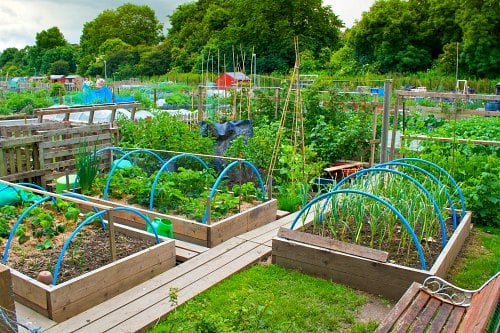
Raised beds are becoming more popular, but do they make sense for the garden? What benefits do they provide? Will they grow more food than convention low beds? Does a raised bed need to have side walls? What is the best building material and soil for raised beds? In this and the following posts I will try to answer all of these questions so that you can make an informed decision about adding raised beds to your garden.

Raised beds with hoops

Read More

If you like this post, please share .......

Walnuts, Juglone and Allelopathy

The common statement “nothing grows under walnut trees” is not true. “Walnuts produce juglone” is not entirely true either. “You need to compost walnut wood chips before using them in the garden” is false. “The allelopathic properties of walnuts are well understood” – not true.

This is a popular subject that is routinely discussed and written about, but the truth around walnut trees is anything but clear.

Black Walnut - Walnuts, Juglone and Allelopathy
Black Walnut – Walnuts, Juglone and Allelopathy

Read More

If you like this post, please share .......

Pulsatilla styriaca

Pulsatilla styriaca, by Robert Pavlis

Pulsatilla are great rock garden plants and any species or cultivar will make a good addition to your garden. They all flower early, and then produce lovely hairy seed heads. Pulsatilla styriaca is one of the earliest pulsatilla to bloom.

Read More

If you like this post, please share .......

Salts Don’t Kill Plants or Microbes

The idea that salts kill plants and microbes seems very prevalent, especially among organic growers. The topic is poorly understood and leads to a number of statements that are either false or mostly false.

“Fertilizer kills plants because it is a salt”

Farmer fields are devoid of microbes because of the salt in fertilizer”

“The NPK in manufactured fertilizer is made soluble by chemically attaching the NPK to salts”

“They [fertilizers] also make it easier for the chemicals to run off into waterways”

“Organic sources contain fewer salts”

“Organic sources are slow release”

“Fertilizers are designed to be highly soluble”

It’s time for a chemistry lesson to better understand salts, ions and the difference between synthetic and organic fertilizer.

Salts Don't Kill Plants
Salts Don’t Kill Plants

Read More

If you like this post, please share .......

Growing Under Walnut Trees

There is a very common myth that says, “nothing grows under walnut trees”, but that is far from being true. If you have walnut trees in your yard or the neighbors yard, you can still have a very lush garden and grow most things.

Gardening Under Walnut Trees, Garden of Phil Reilly
Gardening Under Walnut Trees, Phil Reilly’s Garden

Read More

If you like this post, please share .......