I have been gardening my whole life and have a science background. Besides writing and speaking about gardening, I own and operate a 6 acre private garden called Aspen Grove Gardens which now has over 3,000 perennials, grasses, shrubs and trees. Yes--I am a plantaholic!
Should you prune cucumbers? Some people prune suckers off tomatoes and if it is a good idea for tomatoes, would it not also be a good idea for cucumbers?
If you decide to prune, which pruning method is best. Some prune out sucker, others remove lower leaves and still others even prune out excess fruit. Is pruning cucumbers a myth or not?
Pruning Cucumbers – Will It Produce a Higher Yield?
Neem oil has become a popular insecticide and fungicide that is used by many gardeners. The attraction is that it is natural, organic, and relatively safe. It can be used to control or kill a wide range of pests, and it’s relatively available to the consumer.
Discussions on social media suggest that neem oil controls just about any insect and disease found in the garden. Such an all inclusive product would certainly be good to add as a gardening tool, but before you do that, I suggest you read this post and get some important information about it. It is critical that you buy the right product because a lot of the commercial neem products have a limited ability to control insects.
Neem Oil Insecticide and Fungicide For Plants, image source: Hayavadhan
Aphid control is a real concern of gardeners and several options have been proposed including yellow sticky traps. These can be yellow cards or yellow drinking cups, both coated in some sticky material.
The concept is simple. Aphids are attracted to the color yellow and head for the trap. once they get they become stuck and die. Problem solved.
You can buy these commercially, or make your own following many DIY online recipes. But do they work? Will they solve an aphid problem in the garden? Lets find out.
Aphid Control – Do Yellow Sticky Traps Work?, photo source: The Fervent Gardener
Several gardening trends are colliding. Lots of new gardeners want to grow vegetables and raised beds are very popular. Combine that with a desire to be green and reuse material and tire gardens seem to be a good option. These are gardens made with old discarded tires.
Tires have another big advantage. They accumulate heat which potatoes and tomatoes just love, especially in colder climates.
But are these tires safe? Do they leach toxic material that will get into the food and contaminate it? There are lots of opinions on this, but very little in the way of a scientific review. Time to change that.
Tire Gardens for Potatoes and Tomatoes – Is it Safe?, photo source Lovetoknow
Baking soda in the garden seems to be the next fad. Numerous videos and blog posts tout the many ways you can use baking soda, but do any of these hacks work?
It’s a pesticide, a herbicide, a fertilizer and it makes tomatoes taste sweeter. You can even use it to measure the pH of your soil. It’s a wonder product for the garden. You might think that is all nonsense, but there is some truth in some of the claims. In this post I will look at the claims and separate fact from manure.
Baking Soda in the Garden – Hacks that Work and Don’t Work
The gypsy moth caterpillar has a major outbreak every 7 to 10 years and early signs are that this is going to be a bad year for them. Many of the control methods need to be started when the caterpillar is still small and before they do much damage to trees. If you wait longer, it will be much harder to control them.
There is a lot of talk about the gypsy moths on the internet, but many people confuse it with other look-a-like caterpillars. It is import to ID them correctly, because different caterpillars require different control methods. If you don’t know which one you have, you might be wasting your time.
The internet is also full of DIY solutions that just don’t work. In this post, I’ll help you ID your caterpillars and show you how to control the gypsy moth.
Gypsy Moth Caterpillar – Proper Identification and Control, photo credit Toronto Sun
Ladybugs, which are also called ladybirds and lady beetles are good predators for things like aphids and many people recommend buying them as a natural method of pest control in the garden.
Does this work? Should you buy ladybugs for the garden?
Should You Buy Ladybugs for the Garden, photo source Sam Prestigiacomo
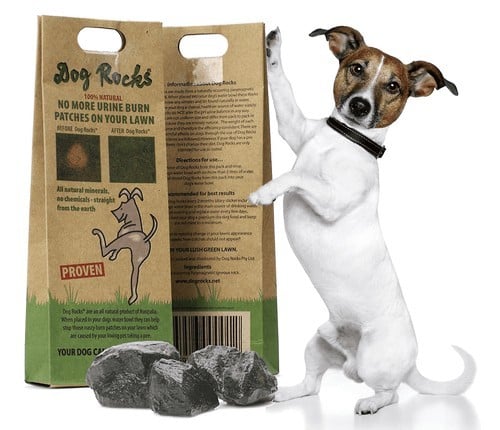
I first heard about Dog Rocks in a Facebook Group a couple of weeks ago. Someone was looking for a solution to the urine burn marks their dog left on the lawn, and Dog Rocks were suggested. Initially, I envisioned rocks being used to cover up the burn marks, but that is not how this product works. Instead, you put the rocks in the drinking water, and they absorb nitrates from the water. As one advertisement put it, “less nitrates going in means less nitrates coming out the other end.” With lower nitrates, the grass is not burned, and your dog no longer creates spots on the lawn.
Normally, when I review products for the garden, I try to be politically correct and bite my tongue, but not this time. This is the dumbest product I have ever come across. A small bit of logic will tell you that it has zero chance of working, and I’ll explain why shortly.
Do you want to grow great tomatoes? Most gardeners do and they are on a constant hunt for magical concoctions that will create the best yield and most flavorable tomato. The latest craze involves the use of aspirin. Just mix a few aspirin in water and spray your plants. Spraying tomatoes or any other kind of plant with aspirin will make them grow better, have less diseases and ward off insects.
My regular readers will know that I love to find the origin of a myth, and I think I know how this one got started. Lets have a closer look at how some science can result in an online sensational cure-all.
Aspirin Spray for Tomatoes and the Vegetable Garden
Everyone wants to be green, and now you see a lot of compostable plastic on the market. Is compostable plastic really compostable? Can I add it to my compost bin? How long does it take to decompose? These are all good questions that gardeners should be able to answer.
My Master Gardener group had a year-end party, and one member brought some compostable plastic drinking glasses. As I was collecting them at the end of the evening, I started to wonder how well they decomposed. I had previously looked into compostable tea bags and was surprised by what I learned. Are these drinking glasses just some more greenwashing?
In this post, I’ll discuss compostable plastic, compare that to biodegradable plastic, and explain the role of all of these in the garden.
Is Compostable Plastic Really Compostable?, image by aaron.bihari
Several years ago I was going to write a post about Roundup and glyphosate, its active ingredient, but decided against it because several very good science-based reports were produced by others. Unfortunately, those reviews were not directed towards gardeners and based on frequent discussions on social media, the message is still not getting through to the gardening community.
My goal in this post is not to do my usual deep dive into Roundup, but instead I want to give readers a summary overview of the facts along with references containing more details. I hope that putting all of the information in one spot will make it a useful tool for discussions in gardening social media groups.
The Truth About Roundup and Glyphosate That Every Gardener Should Know. photo by Mike Mozart
Composting is an integral part of gardening that has been carried on for generations. That has led to a lot of composting myths. What can you add? What can’t you add? Is it difficult? Do you have to follow specific methods to make it work?
In this post I will answer all of those questions and more, by looking at 27 common composting myths.
Composting Myths That Will Save You Time and Money