

Spider mites are one of the most common and frustrating pests an indoor gardener can encounter. They can be hard to control if you don’t understand the pest and use the right techniques to control it.
Unfortunately, a lot of the information online is wrong, which causes unnecessary frustration and lost plants.
Key Takeaways
- Spider mites prefer warm, dry places, like your home in winter.
- Check plants regularly and quarantine new plants.
- Control with insecticidal soap or horticultural oil.
Understand Spider Mites
You can’t control a pest you do not understand. Nor can you evaluate online suggestions from fellow gardeners. So let’s start by understanding the pest.
Spider mites are tiny, plant-attacking organisms that are not actually insects; they are arachnids, placing them in the same family as spiders, scorpions, and ticks. They are found in almost any habitat, including the home garden. If you have houseplants, especially those struggling during winter, you need to know how to spot and stop these microscopic vampires before they overwhelm your collection.
The term “spider mite” is often used broadly for species that attack plants. While the information here pertains primarily to the two-spotted spider mite (Tetranychus urticae), which is the most important and common species on houseplants, it is important to note that many different types of webspinning mites exist. Other closely related species in the Tetranychus genus, such as the Pacific spider mite or the strawberry spider mite, can also be found, though their damage patterns, biology, and management are virtually the same.
Infestations tend to peak when conditions are hot and dry. This means that the dry, low-humidity air commonly found inside homes, especially during winter heating cycles, provides the perfect environment for mites to thrive. Control is easiest when these pests are caught early. Our primary defense involves vigilant monitoring, making cultural adjustments (like managing humidity), and using effective contact treatments.
Identifying the Threat: What Do Spider Mites Look Like?
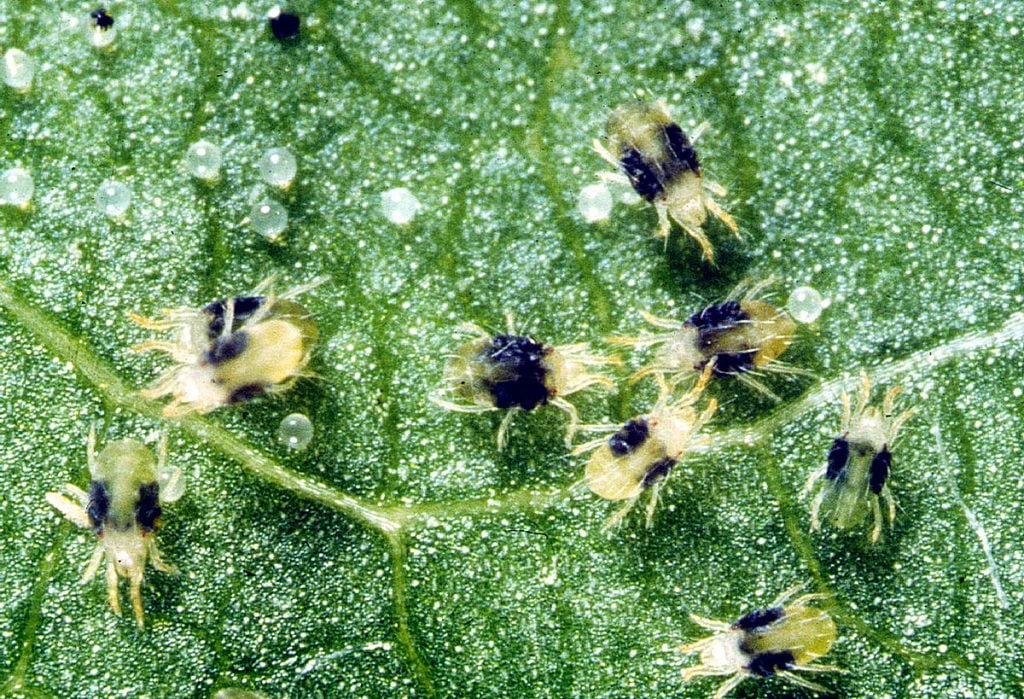
Spider mites are notoriously difficult to see because they are so small. To the naked eye, they look like nothing more than tiny, moving dots. Adult females are the largest form, measuring less than 1/20 inch long—roughly the size of a period drawn with a pencil or a grain of sand.

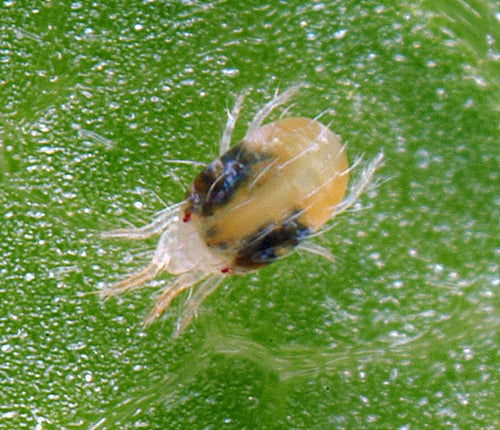
As arachnids, adult spider mites typically have eight legs and an oval body. When they first hatch, the larvae have only six legs, progressing through two nymphal stages before reaching adulthood. The two-spotted spider mite is usually pale green to orange during the growing season and often has two dark spots on its body. Later generations, or those preparing to overwinter, may appear red or orange, which is why some people refer to them as “red spiders”. Their eggs are spherical and translucent, appearing like tiny droplets, and are generally too small to see without magnification.
Mites are not randomly distributed; they live in dense colonies. They feed and reside predominantly on the undersides of leaves.
A crucial point for control is recognizing where they do not live: spider mites do not live in or feed on the soil or roots. They need chlorophyll-containing plant tissue to survive.
Myth: The common suggestion to replace all the soil and wash the roots makes no sense since they don’t live in soil or eat plant roots.
To scout for mites, regular and frequent inspection is necessary. You can use a 10X hand lens to closely inspect the undersides of discolored leaves. A quick detection method is to hold a white piece of paper underneath a potentially infested leaf, then gently shake the leaf. If mites are present, they will fall onto the paper and, once disturbed, will move around rapidly, making the dots easy to see.
Recognizing Damage and Infestation Signs
Spider mites cause damage by using piercing-sucking mouthparts to remove chlorophyll and suck cell contents from the plant tissue. A small number of mites is usually not a problem, but high populations can severely damage plants.
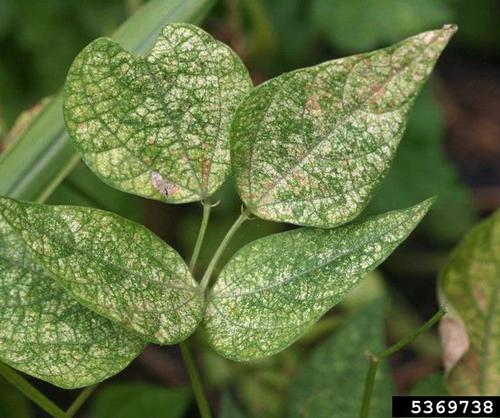
The damage generally starts in the lower, older growth of the plant and expands upward as the population grows. The most common initial symptom is stippling. Stippling appears as tiny white or yellow spots where the green chlorophyll pigment has been removed by the mites’ feeding. If the damage is extensive, the leaves may become pale, unusually yellow, or look generally unhealthy, similar to how a plant looks if it needs fertilizer or is drought-stressed.
As feeding progresses, some plant types may respond with bronzing—developing a bronze or brownish cast to the leaves. Heavily infested leaves may eventually turn yellowish or reddish and drop prematurely. On annual plants, such severe damage can lead to the death of the plant.
In the case of severe infestation, leaves can take on a dusty, gritty feeling. This rough texture is caused by the accumulation of mite residue, including shed exoskeletons (skins), fecal matter, and fine webbing.
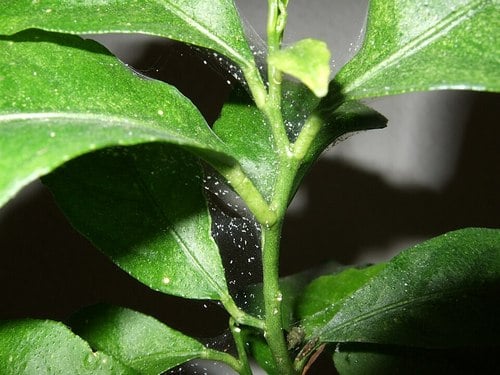
The most recognizable sign of a large, entrenched colony is webbing. This fine silk, which is similar to, but often much finer than, spider webs, is found across new growth, between leaves, and covering the colonies. A buildup of webbing is a definitive indication of a severe infestation.

Why Spider Mites Thrive Indoors
Spider mites are environmental opportunists, and the conditions inside most homes are perfect for their exponential growth. They are known to flourish in hot, dry weather. Their ideal environment involves temperatures in the 80s (F) and above, coupled with low humidity (less than 50%). The dry, arid environment of a centrally heated home, especially during the winter months, often meets these requirements.
When conditions are hot and dry, spider mites reproduce incredibly fast. Eggs hatch in 3-5 days, and a new generation can be completed in as little as 5–7 days, leading to dramatic population surges that make it seem as if large numbers appeared overnight.
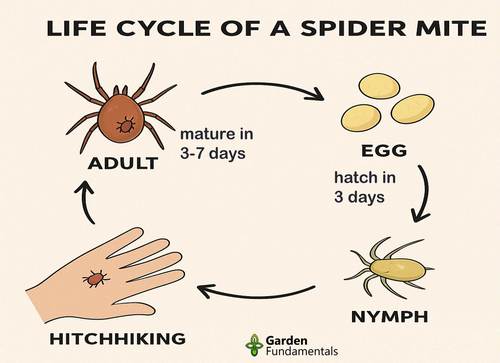
Furthermore, plants that are under stress are far more susceptible to damage. Drought-stressed plants are particularly vulnerable, as reduced watering can alter the plant chemistry, making them more nutritious to mites. Ensuring adequate watering is therefore a key part of prevention.
When spider mites move between your houseplants, they primarily spread by crawling. They crawl from leaf to leaf when plants are touching, or along surfaces like windowsills or shelves. Mites can also drift short distances on indoor air currents created by fans or HVAC systems, a behavior known as “ballooning,” especially when populations are high.
However, the most common way new infestations start is by bringing home a new plant that already has unseen mites or eggs hidden on the undersides of its leaves. Mites may also hitchhike on hands or gardening tools that have brushed against infested plants.
Controlling Spider Mites
There are two lines of defense: Prevention and Control.
Immediate and Cultural Control (The First Line of Defense)
Since spider mites are easiest to control when infestations are addressed early, cultural and physical controls should always be the first line of defense.
Isolation and Pruning: If you purchase a new houseplant, always quarantine it for two to three weeks before placing it near your main collection to prevent introducing pests. If you discover mites on an existing plant, isolate it immediately. For plants that are small and heavily infested, it is often quicker and easier to simply discard them rather than trying to restore their health. For larger plants, you should pinch off and destroy any heavily affected leaves or stems.
Physical Removal by Water: Mites dislike moisture, and you can leverage this for control. Use a forceful jet of water to physically dislodge the mites and wash away the webbing they use for protection. You can move the plant to a shower or sink and spray vigorously. It is critical to ensure thorough coverage, specifically targeting the undersides of the leaves where the colonies reside. This technique may not be suitable for very young or delicate plants.
For larger leaves, or if spraying is impractical, you can use a soft, damp cloth to wipe off the leaves, paying special attention to the undersurfaces.
Humidity Management: Because mites thrive in low humidity (less than 50%), increasing the moisture around the plant can help reduce its attractiveness to them.
Misting is a common recommendation that does not work unless you are willing to mist every few minutes. Misting can also lead to fungal and bacterial diseases.
Plant Health and Vigor: Healthy plants can better tolerate minor damage from mites. Water stress is a known factor that contributes to mite damage. Therefore, ensuring your plants are adequately watered and receiving proper fertilization reduces their overall stress and vulnerability to mite attack.
Chemical and Targeted Control Methods
If cultural and physical controls are not enough to manage a spider mite population, targeted chemical applications are the next step.
Contact is Crucial: The most effective chemical solutions available to the average gardener are contact products. This means the substance must directly cover the mites’ bodies to work effectively. Achieving total coverage, especially on the densely populated undersides of leaves, is essential for success.
Furthermore, most contact products, like soap and oil, do not kill the eggs. Therefore, repeat applications are required, often 2–3 days later, to kill the newly hatched mites.
Contact Pesticides (Soaps and Oils)
- Insecticidal Soap: This product is reasonably effective, has a low impact, and is suitable for houseplant use. Always use a commercial insecticidal soap product, as ordinary dishwashing detergents are toxic to plants.
- Horticultural Oils: These are among the most effective miticides for home use. You can use either petroleum-based horticultural oils, often called “summer oil”, or plant-based oils, such as Neem oil.
Insecticidal soap can be very inexpensive if you buy a concentrate: Inexpensive Insecticidal Soap
Application Cautions: Before using any soap or oil, test a small area of the plant first to ensure it won’t cause damage (phytotoxicity). Never apply soaps or oils if the plant is water-stressed or if the temperature exceeds 80°F to 90°F (26°C to 32°C), as this significantly increases the risk of leaf burn. Always water the plant thoroughly before spraying.
Spot Treatment with Alcohol: A common recommendation by gardeners is to use rubbing alcohol (isopropyl alcohol) for spot treatment or physical removal. Although it will work for small infections or for cleaning leaves, it is not recommended by extension offices.
If you choose to spray alcohol, use a highly diluted solution (e.g., 1–3% concentration), as higher concentrations carry a greater risk of leaf burn. Always test a small area first, and rinse the plant with water after treatment to remove residual alcohol.
Broad-spectrum insecticides
Certain broad-spectrum insecticides, such as organophosphates or pyrethroids like bifenthrin, also work for spider mites. These chemicals are often not very effective against mites themselves. Use a product that is labeled for spider mites and follow instructions.
Prevention and Long-Term Houseplant Health
Long-term management relies on continuous vigilance and preventing the conditions that favor mite outbreaks.
The most effective prevention is regular scouting for the signs of mites—stippling and fine webbing—especially when the air is hot and dry.
To minimize the risk of spread, prevent plants from touching one another, as crawling is the main way they move indoors. Always quarantine any new plants for at least two to three weeks before introducing them to your collection to ensure they are pest-free. If you have handled an infested plant, be sure to clean your hands and tools before touching healthy plants to avoid hitchhiking mites.
Although they are a frustrating and common pest, spider mites can be successfully managed in the home environment.


I HAVE ALBERTA SPRUCE. CAN I SPRAY THEM IN THE WINTER FOR MITES?
Sure – but why not just let nature take of it? I assume it is outside?
They are the bane of my unheated greenhouse! I do not keep plants in my greenhouse during our winter season (Nov – Apr), yet they return every summer. Are they able to overwinter in soil? Thank you for your evidence-based articls.