

Lots of people in warmer climates grow Streptocarpus outdoors, but what about growing them outdoors in colder climates where winter is so cold that they won’t survive?
It does not seem to be a common practice, but since I do a lot of outdoor gardening in zone 5, I had to try it. Here is what I have learned.
Key Takeaways
- Not much luck growing in the ground at my place.
- Grows well in a container.
- It can be overwintered in a cool, dark place.
Purchase Streptocarpus seeds, leaves, and plants.
Growing in the Ground
My first set of experiments was to try and grow them as annuals in a normal garden bed along with other plants, including primulas. I tried for two years with the same results.
I planted them in full shade and in part shade. They survived all summer, flowered for most of it, but did not thrive. Leaves never developed to their full size. Instead, they tended to get brown edges and die back.
Perhaps they needed more moisture?
The pH might also have been a problem. My soil is about 40% clay with a pH of 7.4.
I never did take pictures because they were just sad little seedlings that were too embarrassed to have their pictures taken.
Growing in Containers
I had given up trying to grow them outside when a good friend and gardening expert told me about a streptocarpus he has been growing outside for years. I questioned him about the plant, thinking that it might have been a Streptocarpella, which is occasionally grown outside around here.

He sent me a picture, and sure enough, it was Streptocarpus ‘White Ice’.
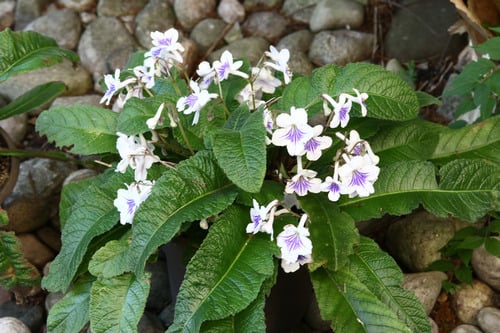
He grows the plant in a container, outside all summer. In the fall, he brings it into a garage that stays fairly warm for our climate. It reaches a low of 8°C (46°F). Mine would go down to freezing in winter.
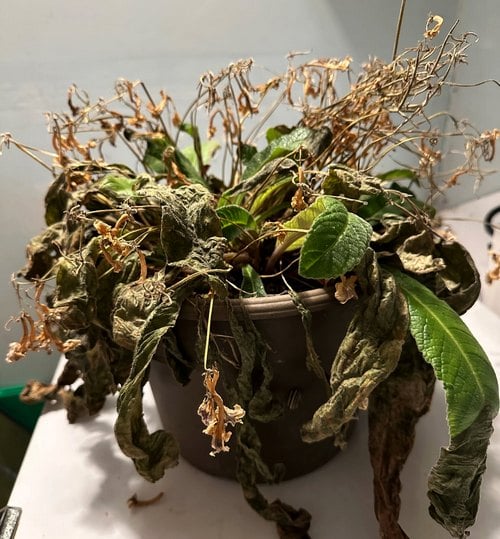
It is kept cold and dark all winter and is then brought out again in spring. It dies back during the winter and looks quite terrible. The species, in nature, also do that. They stay above ground, but the leaves shrivel up to brown stubble. Then, with the arrival of spring rains and warmer temperatures, they begin to grow again.
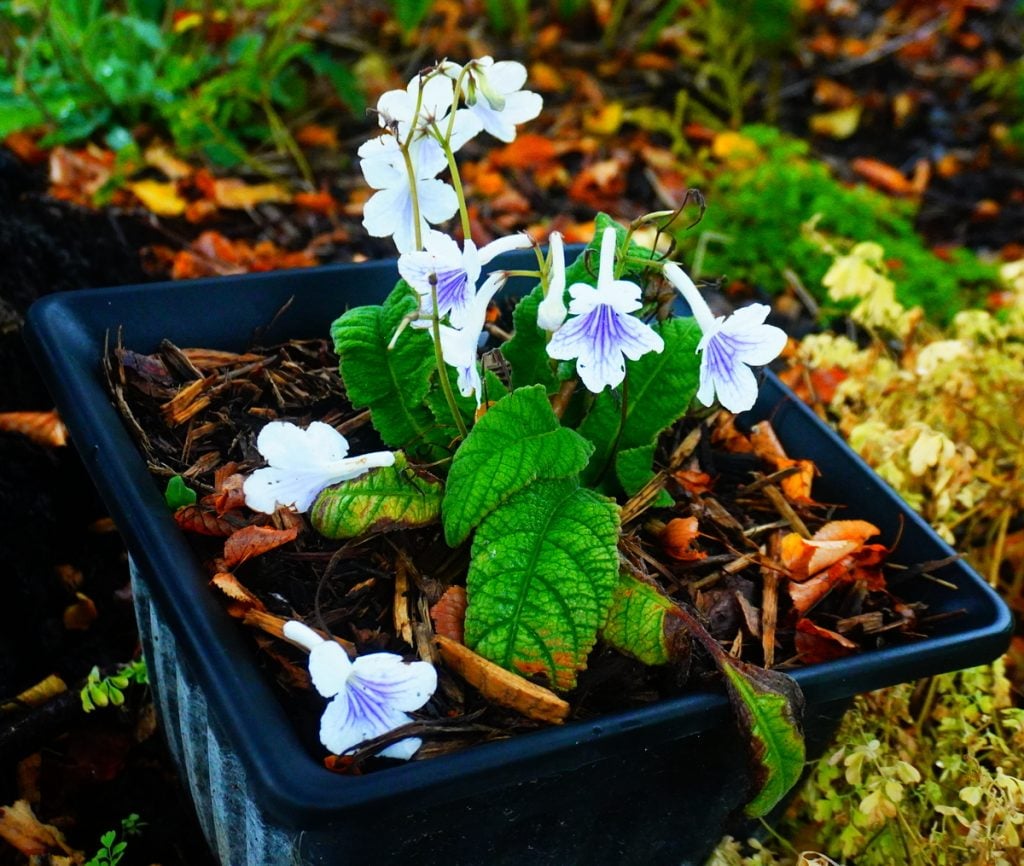
This spring, I decided to also grow one outside in containers. I just happened to have a White Ice and decided to use it. This is a good grower that is always in flower. The top picture of the post shows the plant in an 8″ pot growing under a tree. The picture was taken in mid-August.
It has been a fairly dry summer, and the plant is watered about twice a week.
When it first went outside, it died back a bit and lost some of its leaves. It may have gotten too much sun as the tree was leafing out. It never stopped flowering. Around mid-summer, it started to recover and now has a good set of leaves and is getting larger.
Fall Time
My plant flowered right up to the first frost. The image below shows it after a light frost. It still has some green leaves, but most of them are brown from frost damage.
The plant was brought into a cold garage so it can start to go dormant. The plan is to move it to a cold fruit cellar once the temperatures get too cold in the garage.

What Happens in Winter?
My friend David keeps his plant in a garage that does not reach freezing temperatures. The leaves die back due to low light, cooler temperatures, and less water. See the previous picture.
My garage is too cold in winter, so I plan to move them into the fruit cellar in the fall. It is probably a bit warmer than David’s garage, but it is dark, and they will be kept on the dry side. I use it to overwinter other plants like agapanthus. I’ll post on their progress during the winter.
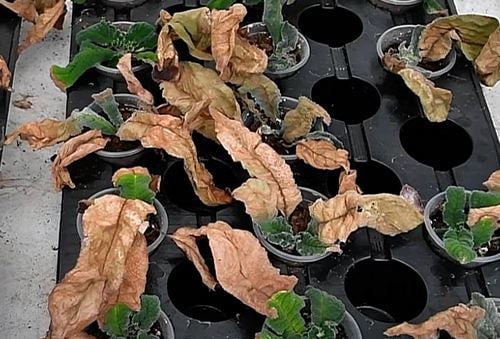
A well-known Russian streptocarpus grower, Dimetris, also lets some of his plants cool down to about 10 °C and did not water them for 3 months. The above picture comes from one of his videos and shows the plants looking quite sad. Leaves are dying back, and the plant is shrinking. With water and a month of growing, the plants looked much better and were growing new leaves.
General Culture of Streptocarpus
Here are other resources for growing streptocarpus in the house.
Growing Streptocarpus: Watering
Growing Streptocarpus: Light Conditions
Growing Streptocarpus: Germinating Seeds
Growing Streptocarpus: Planting Too Deep


Key takeaway for me: Don’t give up too soon on a plant that looks dead.
I’m lookin forward to seeing photos of your Agapanthus overthe winter, and as it recovers. It’s a beautiful flower, widely planted in southern coastal California (outdoors, natch.)