As part of my research on soil products I became aware of the fact that most garden soil is not garden soil. If it is not soil what is it?


As part of my research on soil products I became aware of the fact that most garden soil is not garden soil. If it is not soil what is it?
Squash, cucumber and pumpkin belong to the cucurbit family and most garden varieties produce both male and female flowers. Since only female flowers produce fruit, gardeners get concerned when they see too many male flowers and like any other gardening problem they invent lots of ways to fix the problem. Unfortunately most of these so-called fixes don’t actually work.
What causes too many male flowers on cucumbers, pumpkins and squash, and what can be done about it?

The first hybrid streptocarpus was released in 1946 and since then hundreds of new cultivars have been developed and yet few people are familiar with them. I predict that will change. Streps are easy to grow house plants that can flower all year long. What other house plant gives you that much star power in a small package? They are even better than orchids because they flower more and are easier to take care of.
However, even this lesser-known houseplant has started to generate some gardening myths. Let’s have a look at some here.

Streptocarpus are not commonly available and most gardeners either have not heard of them or they know very little about them. I was one of these gardeners not that long ago but now that I have some experience with them I can’t believe they aren’t more popular. They grow in fairly low light, are easy to take care of and flower 12 months of the year. They are also available in hundreds of colors and flower shapes including singles, doubles, straight and frilly-edged. Some of the newer hybrids don’t even look like streptocarpus. In this post, I will introduce you to streps, as they are commonly called.

Sandy soil can be a difficult place to garden. It dries out quickly. It lacks nutrients. The amount of microbial life is very low. But it is easy to dig. It is claimed that clay can be added to sandy soil to improve it’s qualities but does this really work?
Adding clay to sand is a popular technique in some places like Australia and China, but it is not used very much in North America. Why is that?
There are many different kinds of clay – which one is best?

Lots of information in books and on websites recommend a soil test to help you select the right fertilizer numbers. This is very good advice but it has limitations.

Pond muck is the organic material that accumulates in the bottom of a pond. It can be physically removed with nets and vacuums, or you can try to degrade it using commercial bacterial products such as MuckOut, Macro-Zyme, Muck Pellets, MuckAway, Natural Clear, Mukk Busster, Muck Reducer, Muck Doctor, MuckBiotics and the product name I really like, ” Get The Muck Outta Here”. All of these products claim to reduce the amount of muck in the pond and some also claim to reduce the nutrient level.
Do commercial muck reducers work?

Turfgrass is losing its status as the golden child of groundcovers as gardeners look towards greener pastures. Clover has been getting a lot of buzz as a low-maintenance and eco-friendly lawn alternative or additive. Keep reading to find out what to expect from clover as a lawn alternative and how to add the right clover to your lawn.

Cold climate gardeners are always looking for something exotic to grow and there are few plants that beat the dark red-leafed castor bean. Unfortunately, this plant has a bad reputation for being poisonous. Many experts tell you not to grow castor beans because they are so toxic.
I used to grow it, and grew a new variety last year. I am still alive! So how toxic is it? Is it safe to grow in the garden?

Memes have become very popular because their image fits nicely in most social media platforms, and they present information in a brief catchy format that is easy to share. Who has time to actually read and understand a topic?
Unfortunately, some are made by people who know very little about gardening or don’t take the time to check their facts. To catch your attention, authors use short catchy phrases that skip the important details. The result are memes that are wrong, or at best misleading.

I started gardening a long time ago and at that time tilling was standard practice. Most gardeners did not have a tiller so they did it by hand with a shovel. In some circles the idea of not tilling started to make waves. My first introduction was Ruth Stout’s no-till garden. Just cover everything with straw. Better for the soil and a whole lot less work. No-till became more popular in agriculture in the mid 1990 but few gardeners followed suit. Even today, many gardeners have never heard of the technique and continue the practice of spring tilling.
No-till is claimed to be better for soil and the environment since it releases less carbon dioxide into the air.
I have been promoting this idea in gardening circles for 15 years or more and slowly the idea is catching on with gardeners, but it might be time to take a step back and have a close look at the claimed benefits of no-till because science now has a lot more data on this.

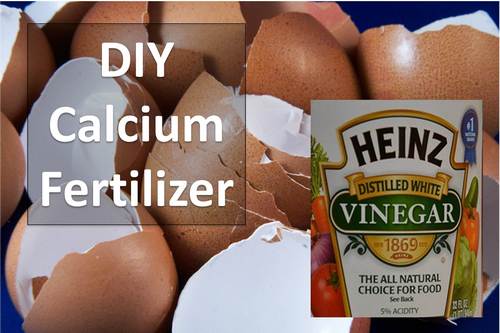
I recently did a post about Cal-Mag where I described the value of getting the calcium level right. As part of that work, I found recipes for making Cal-Mag fertilizer at home using eggshells, vinegar, and Epsom salts. I’d like to use this post to have a closer look at these methods to figure out if they work and if gardeners should be using them.