Ginkgo Biloba Tree Myths – The Maidenhair Tree

Ginkgo biloba (also spelled gingko) has become a popular tree, and many people are able to recognize it. It’s a living fossil that has been around for millions of years. Dinosaurs roamed the ginkgo forests, and it has been part of Chinese herbalism for centuries. It is unlike any other tree we grow, and it has become the symbol of strength, hope, and peace.

Several ginkgos stood near the detonation site of the nuclear bomb dropped on Hiroshima. They not only survived the blast, but they fully recovered and are still standing. It is now regarded as a symbol of endurance and vitality.

Its long history and unusual botanical attributes have contributed to a number of myths about Ginkgo biloba.

Ginkgo Biloba Tree Myths - The Maidenhair Tree
Ginkgo Biloba Tree Mythsโ€”The Maidenhair Tree

Read More

If you like this post, please share .......

Plants Donโ€™t Produce Oxygen (O2) From Carbon Dioxide (CO2)

Everyone is aware of the high carbon dioxide levels in the air and its contribution to global warming. And many of you have heard that plants can convert this CO2 into oxygen. Plants are important in controlling the CO2 level, but they don’t convert CO2 into O2.

Did you know that plants also take in oxygen and produce carbon dioxide, just like animals?

All of this is a bit academic, but very interesting if you really want to understand plants.

Plants Donโ€™t Produce Oxygen (O2) From Carbon Dioxide (CO2)
Plants Donโ€™t Produce Oxygen (O2) From Carbon Dioxide (CO2), Photo source: Science Sparks

Read More

If you like this post, please share .......

Increasing Humidity for Indoor Plants – What Works and What Doesn’t

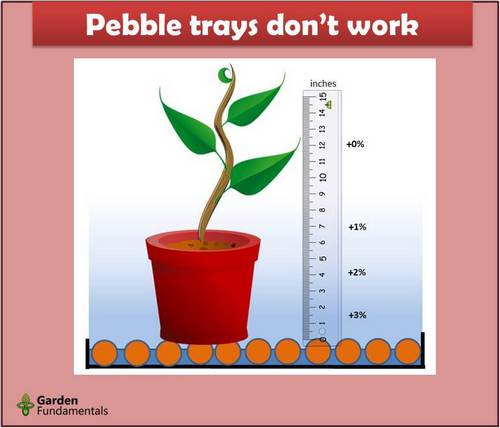
Indoor plants do better withย  higher humidity and there are several recommended ways to create this increased humidity. Some of these suggestions, like misting and pebble trays, have been used for many years and are still being recommended today. But do they work? Do they increase humidity and are they good for houseplants?

The heating we use in winter dries the air in our home and this makes it more difficult for plants to grow. The same thing can happen with air conditioning in summer. Tropical houseplants are particularly vulnerable.

What is the best way to increase the humidity around your indoor plants and how high should the humidity level be?

Increasing Humidity for Indoor Plants - What Works and What Doesn't
Increasing Humidity for Indoor Plants – Pebble Trays Don’t Work

Read More

If you like this post, please share .......

The Myth of Growing High Nutrient Density Food

The quality of food is so important to everyone these days, and many are growing their own to have better control over nutrient density. Many different gardening styles, such as organic, permaculture, and regenerative, promote their systems as the best way to maintain high nutrient density.

How much of this information is true? What can a backyard gardener do to grow more nutritious food?

In this post, I will help you understand what nutrient density really is, and I’ll help you weed through a lot of the gardening myths that claim to grow high-density food.

The Myth of Growing High Nutrient Density Food

Read More

If you like this post, please share .......

Does Clematis Wilt Really Exist?

Clematis have fairly few pests or diseases but they do suffer from the dreaded clematis wilt and it can be devastating. A plant that is growing great and ready to flower one day, is almost dead the next. All the leaves go black and the flower buds wilt. So much for this season.

Clematis wilt was first reported in 1885 and we have been trying to understand it ever since. A lot of progress has been made, but even today it is not fully understood. Some believe it is caused by a fungus, and others believe it is a watering issue. Confounding the whole thing is the fact that many gardeners think they have clematis wilt when in fact they don’t.

In this post will summarize what we know and don’t know about clematis wilt, and in the process help gardeners better understand the culture of this fantastic plant.

Does Clematis Wilt Really Exist?

Read More

If you like this post, please share .......

How To Grow Moss – Which Method Works Best?

Some of you want to get rid of the moss in your lawn and others want to grow more of it in special places like rocks and logs. Moss is a fairly good ground cover, it can take some traffic, and never needs to be mowed. It doesn’t need to be fertilized because it prefers low nutrient levels.

Moss is also a great addition to shade gardens giving them an aged look that is so hard to get. If you are building a stumpery, you almost have to add some moss to give it a final touch of authenticity.

But how do you grow more moss where you want it? You might be surprised to learn that not everything on the internet works. In this post I’ll review and test several ways to grow moss.

How To Grow Moss - Which Method Works Best?
How To Grow Moss – Which Method Works Best?

Read More

If you like this post, please share .......

Are Marigolds Good for Companion Planting?

There is a lot of talk about companion planting, especially for the vegetable garden, and marigolds seem to be at the top of most plant lists. They make other plants grow better and their strong smell keeps pests away. They even stop root knot nematodes.

Much of this information is anecdotal and I suspect some of it is just made up to sell some popular books. What do marigolds actually do in the garden?

Are Marigolds a Good Companion Plant?

Read More

If you like this post, please share .......

Will Methanol Foliar Spray Grow Bigger Plants?

In 1992, The New York Times reported that “Crop plants sprayed with diluted methanol showed significantly greater yields while requiring less water. Cabbages doubled in size, wheat seeds doubled in weight and number, the water needs of cotton crops dropped by half, tomatoes grew faster and were significantly sweeter, roses grew faster and produced more flowers, and strawberries, eggplants and watermelons gave better yields.”

That was almost 30 years ago. What does science say today, about using methanol on plants?

Will Methanol Foliar Spray Grow Bigger Plants?
Will methanol foliar spray grow bigger plants?

Read More

If you like this post, please share .......

Overwintering Pond Plants – Part 2

In this post I’ll look at some specific plants and discuss ways to overwinter them. Some plants can be brought indoors and grown in a green state just like your other house plants. Others can be easily stored in a semi-dry dormant state.

In my post, Overwintering Pond Plants – Part 1, I reviewed general ways to overwinter both hardy and non-hardy plants.

lilies with pink flowers
Overwintering Pond Plants – part 2

Read More

If you like this post, please share .......

Straw Bale Garden vs Traditional In-ground Garden – A Critical Comparison

Straw bale gardening seems to be an “in-thing” to try and I have written about it in Pros and Cons of Straw Bale Gardening. I see people on line praising the technique, but I also see a lot of people reporting failure. What is rare is any side-by-side comparison of straw bale gardening to traditional in-ground gardening. Even proponents of straw bale gardening don’t provide evidence for their claims by making a comparison.

I wanted to see for myself how well it worked, so this year I decided to do a comparison between my traditional vegetable garden and straw bale gardening. Here is what I found.

Straw Bale Garden vs Traditional In-ground Garden
Straw bale garden vs traditional In-ground garden

Read More

If you like this post, please share .......

Amsonia orientalis

Amsonia orientalis is a rare perennial that looks good most of the season and even has good yellow autumn color. It is supper easy to grow in just about any location from sun to part shade, dry to moist and any kind of soil. Its azure blue flowers are attractive without being gaudy.

Read More

If you like this post, please share .......

Primula sieboldii

Primula sieboldii, is a fun little primula with lots of variation in its flowers in both color and petal shape. It blooms after many other primulas and its flowers last for more than 4 weeks. It is a great addition to any shade garden.

Read More

If you like this post, please share .......