I have been gardening my whole life and have a science background. Besides writing and speaking about gardening, I own and operate a 6 acre private garden called Aspen Grove Gardens which now has over 3,000 perennials, grasses, shrubs and trees. Yes--I am a plantaholic!
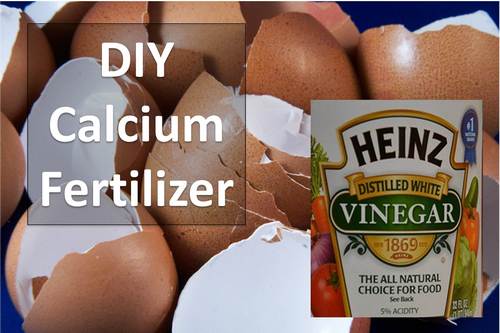
I recently did a post about Cal-Mag where I described the value of getting the calcium level right. As part of that work, I found recipes for making Cal-Mag fertilizer at home using eggshells, vinegar, and Epsom salts. I’d like to use this post to have a closer look at these methods to figure out if they work and if gardeners should be using them.
DIY Cal-Mag Fertilizer (Calcium Acetate)—Does – Does It Work?
In years gone by it was common to clean up the garden in fall. It does result in a neat clean looking garden, but then we learned that all kinds of beneficial insects overwinter in that messy looking stuff on the ground, so we started to do cleanup in spring instead. To understand why, read this; Spring Cleanup Advice – Do it Right .
Now things have changed again. We are being told not to cleanup until temperatures are consistently above 10 C (50 F) to allow insects time to leave their winter protection. If you look at the recently circulated meme below, you have to wonder if this recommendation is valid. Does it really have to be 10 C? I see all kinds of insects when there is still snow on the ground. And what does “consistently ” mean? Is that nighttime or daytime temperature? Is it a daily high or low? How much harm will you do if it is only 9 C (48 F)? Is there any real science that supports this idea? Let’s find out.
Gardeners talk about earthworms as if they are all one species, but there are over 3,000 earthworms on Earth. Some burrow, some are small, some jump, or at least we call them jumping worms. There are also stories of giant three-foot worms, but do they really exist?
We think they are good for our garden because they build better soil, but the same earthworms are also very destructive to natural places.
And then there is the age-old story about cutting worms in half to get two worms – is that true?
I was searching for earthworm myths and stumbled upon this essay on the organic farming myth. It was published in the 1950’s or early 1960’s and the author was fighting back against myths being spread about synthetic fertilizer by the pro-organic movement. The contents really resonated with me because I have been battling the same myths for years. In fact some of the comments like “There is no evidence that mineral fertilizers, when applied at recommended rates, are injurious to soils, or that crops produced by the use of such materials are harmful to man or beast,” are identical to what I tell people in this blog and in my lectures. Ok, I don’t use the word “beast” but I think I will start using it.
It is amazing that after all this time, most gardeners still believe these myths.
Orchids are one of the most popular houseplants because they are easy to grow and flower – for some of us. But many people struggle to get them to re-bloom a second time. Over the years I have heard a number of myths for reblooming orchids and I have even been guilty of passing some of these on to others. In this post I will separate myth from real science to better understand how best to flower orchids.
Flowering Orchids is Easy if You Know What Triggers Them?
Cal-Mag stands for Calcium and Magnesium, two of the macronutrients that are rarely discussed when we talk about plant fertilizer, but they are critical for plants. You can buy Cal-Mag fertilizer to add to your regular fertilizer, or you can buy fertilizer that contains calcium and magnesium. Which option is better and do you need either one?
If calcium and magnesium are so important to plants why are they not included in all fertilizer? It is more complicated than you think.
Cal-Mag for Plants – What Is It and Do You Need It?
Fertilizers are very misunderstood by gardeners and for good reasons. Most books and videos repeat myths about fertilizers and manufacturers create even more myths in order to sell products you don’t need. Even experts, like plant societies, provide the wrong information about fertilizer.
I have assembled 10 of the biggest fertilizer myths in this post and once you understand them better you will save money.
Perlite and Vermiculite are both used as soil additives and they seem to do the same thing. They make soil lighter, hold water and nutrients, and increase drainage. If they are so similar, why do we need both? In this post I will compare the two products and make it clear when and why you should use these soil amendments.
Perlite vs Vermiculite – Which Soil Additive is Better?
Perlite is used a lot in horticulture and can be found in many soilless mixes. There are concerns about fluoride and aluminum toxicity which can be harmful to plants, but how big of a problem is this?
Lots of people recommend the use of perlite in gardens, especially for raised beds. Is that a good idea?
This post will look at the truth about perlite.
Perlite Myths – Should it be Used in Gardens and Potted Plants?, Credit: Grower Experts
I have put together a 12 part class to provide all of the basic information you need to grow better vegetables. The course is designed for both beginner and intermediate gardeners and is offered free on YouTube.
Gardeners have been making and using compost for hundreds of years and we talk a lot about “finished compost”, but what is it? When is compost really finished?
You can make so-called finished compost using a hot compost pile in a few months, but compost continues to decompose for many years. If it is not fully composted when it comes out of the compost pile is it really finished?
When I first asked this question I thought is was a simple one with a simple answer, but even science struggles to define finished compost.
What is the fastest way to germinate pepper seeds? They do germinate a bit slower than other vegetables and that is especially true of hot peppers, so gardeners try all kinds of DIY solutions to speed up the process. In this post I will examine 10 popular ways to speed up the germination of pepper seeds and report on my own experiment that compares most of these methods.
Finally, a definitive answer to the question, what is the fastest way to germinate pepper seeds.
10 Ways to Germinate Pepper Seed Faster – What Works and What Doesn’t Work?, Credit: Daisy Dawes