

Dish Soap like Sunlight or Dawn is a regular addition to home pest control remedies for the garden. You use dish soap every day and eat from the dishes you clean with it – how can it be harmful to plants? It’s time to look through the bubbles and see the truth.

Dish Soap – What is It?
Dish soap is a generic term, but it usually refers to the liquid soap products used for washing dishes. Dawn, Joy, Palmolive and Sunlight are very common brand names. It also goes by the names Dish washing liquid, washing-up liquid, dish washing soap, and dishwasher detergent.
Dish washing soap is a detergent that can include phosphate, bleach, enzymes, dyes, fragrances and rinsing aids.
Scientists distinguish between soap and detergents which, chemically, are quite different. Soaps are cleaning agents made from natural oils and fats. Detergents are cleaning agents made from synthetic chemicals called surfactants. Soap and detergents both clean, but the chemicals in the products are different.
Dish Soap is actually misnamed. It should be called Dish Detergent. You will see why this is important in a few minutes.
Dish soap works by dissolving greasy chemicals like oils, fats and waxes and it is excellent at this job. It is also a powerful degreaser.

Insecticidal Soaps – What Are They?
Insecticidal soaps are pesticides that are used in the garden. I’ll talk more about how and why to use them below.

Insecticidal soap is a true soap, not a detergent.
A soap is made by mixing together sodium hydroxide, or potassium hydroxide with fats. The final product is something called either sodium salt of fatty acid, or potassium salt of fatty acid. This is the same ingredient found in most bars of soap, and in liquid hand soap. Chemically these are very different from detergents, although both clean things.
Insecticidal soap is a special kind of soap. It is made using only potassium which produces a milder, softer soap than sodium. It also uses long chain fatty acids – a special type of fat. This soap is specially made to be mild on plants.
Soaps will also dissolve greasy chemicals like oil, fat and wax, but they are not as good at this job as detergents. From a cleaning perspective insecticidal soap is a great soap.
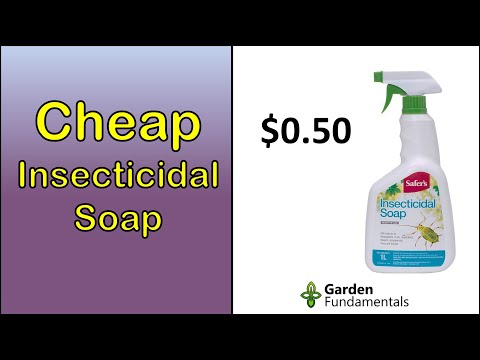
Dish Soap On Plants
What happens when you spray diluted dish soap on plants? Remember dish soap is a detergent that is excellent at removing oil, grease, and wax. When you spray it on your plants, it removes the natural oils and waxes that all plants have on their leaves. These oils and waxes serve to protect the leaves.
When the protective coating is removed from the leaves, it makes it easier for pathogens to get a foothold and infect the plants.
Spraying your plants with dish soap removes their natural defenses against pests and diseases. You are setting the stage for your plants to get sick, and maybe die.
DIY Insecticidal Soap
There are many DIY home recipes for making insecticidal soap. The problem is that NONE of them are insecticidal soap. If they use dish soap – they are detergents, not soaps. If they use liquid hand soap, the fatty acid salts are made from short chain fatty acids which are phytotoxic to plants – they damage plants. You can’t make insecticidal soap using things you find around the house.
One recipe on the internet says “Use a pure liquid soap… Don’t use detergents, dish soaps, or any products with degreasers, skin moisturizers, or synthetic chemicals. ” Soap is a synthetic chemical!
Will the homemade insecticidal soaps get rid of insects? Maybe, but they will also damage and weaken plants.
Is Dr. Bronner’s Castile Soaps Safe?
Castile soaps, of which Dr. Bronner’s is a popular brand, are made from vegetable oils (particularly olive, palm, and coconut) using potassium hydroxide. So they are potassium based soaps and therefore many people claim that they are the same as insecticidal soap. Most castile soaps are mixed with fragrances and essential oils for a wide range of uses but not as insecticides. This soap maybe safer than other sodium-based soap, but nobody really knows what the additives will do to plants. Since it is not labeled as a pesticide it should not be used.

Use Insecticidal Soaps Correctly
My post, Insecticidal Soap – Use it Correctly, provides more detailed information on how to use these products. In summary, they are only effective if you spray the insects – not the plants. Insecticidal soaps are much less harmful to plants, but even they should not be used to cover the whole plant. Although, fairly safe for plants, they will harm certain plants – look at the instructions an keep away from sensitive plants.


I had a large aphid infestation on my banana pepper plant. Everywhere I looked online said to mix dish soap and water and spray all the leaves to kill of the aphids. It killed off the bugs but now 2 days after spraying the plant some of the leaves are wilting and fall off just by touching them. Anything I can do to help the damage possibly caused by the soap?
Time – the plant will probably recover.
Robert,
A question I had came to mind after reading this, and it pertains to dish detergent/soap usage. When I use Neem Oil as a pesticide, I use a very small amount of dish detergent as an emulsifier. With the oil bound to the detergent, would it have less of an impact on the wax/oils already on the plant? I’m not a chemist unfortunately, else I would know if the oil and detergent could reach a saturation point that is thorough enough to prevent it from interacting with waxes and oils on the plant, but it seems reasonable. I won’t assume, so I thought I’d ask if you knew the answer to this one.
At any rate, what a great site. Great to see the truth be exposed to many of the myths I heard and embarrassingly blindly accepted.
A drop or two won’t harm plants.
Thanks so much Robert. I figured that was the case and that this article was more about people who spray their plants with soap as THE insecticide. I’ll check and see if you have an article on Neem Oil. The amount of success I have had with it is absolutely astounding. Virtually every disease and insect issue I have run into vanished completely and has all year (when combined with the usual proper trimming, mulching, and plant care). Take care and stay safe.
Nothing on NEEM yet
Hi there,
By accident my husband used water that was diluted with Mr. Clean antibacterial cleaner to water my garden! I left out a bucket of that stuff that I used to clean my son’s LEGO with and my husband (without knowing) used that same water on my tomatoes, herbs and cucumbers!! Once realized, we added more fresh water to the garden. Will these plants all die? Will they be safe to eat? How about the soil?
Thank you,
Nancy
They will be safe to eat after a couple of weeks.
i find it odd that you are promoting commercial insecticidal soaps so strongly.
?? Actually I don’t – do a search on my site.
I sprayed my young berry bushes with palmolive water and the leaves have wilted snd turned brown. What can i do to prevent them from fully dying out? Or should i just pull them and start over? Wish i had found this article earlier
Wash off the leaves, and wait until the plant grows new ones.
I made the mistake of using dish soap not knowing the problems and now the edges of my leaves are dark and a little wilted. Do you have any ideas how I could reverse this mistake?
You can’t. Just wash off the soap and let the plants grow.
I’m not sure this applies in this situation, but in my garden when the leaves start looking bad I go to the nursery or any garden center and buy a tub of ladybugs. I turn them loose and in a day or two everything looks like new ! And the ladybugs are happy too.
How can ladybugs cure a deficiency of nitrogen in leaves? Or cure a plant from a fungal infection? Both cause leaves to look bad.
This statement makes no sense.
Just a guess, as I’m looking into it at the moment: R Cee might mean to counter the infestation of thrips. My indoor plants suffer from it at the moment, and basically everywhere I look, people recommend using ladybugs, as they’ll eat the bugs. My plants never suffered of any deficiencies, but definitely wilted due to those thrips.
My fiscus bonsai tree leaves turned are whitish. What should I be doing to fix this issue? Thanks a lot!
You did not say why they turned whitish – so I can’t give any advice.
I used dish soap on my spider plant and now many of the leaves look like they have freckles…is there anything to do to fix this PLEASE
Time will heal.
Maybe it’s not technically a fertilizer, but it would feed the microbes which can feed the soil-right?
Any chemical compound eventually breaks down, but it not good for soil.
good Day,
Am now totally confused on the Dish washing soap to protrct your plants from BUGS> Too many opinions, and what i have read got me totally confused. Then I read about Insecticidal soap and it also apparently also not good.
SO WHAT EXACTLY WORKS WITHOUT DAMAGING THE VEGETABLES, SUCH AS TOMATOES, LETTUCE. CARROTS AND GREEN BEANS?????????????
https://www.gardenfundamentals.com/insecticidal-soap-use-properly/