

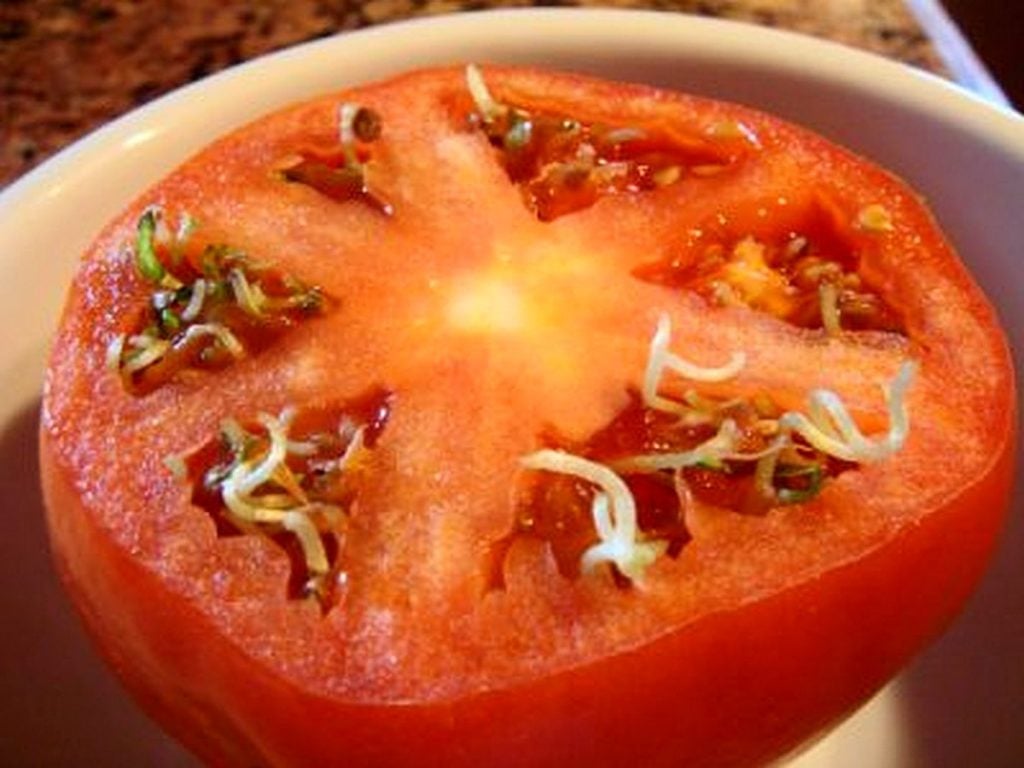
Have you ever wondered why some seeds sprout instantly, while others need weeks of cold stratification, or maybe just refuse to germinate at all? What about when you cut open a ripe tomato and find little sprouts already growing inside? Why does that happen?
Well, the secret behind all this behavior boils down to one powerful chemical compound: Abscisic Acid, or ABA. Think of ABA as the seed’s internal timing mechanism. Today, we’re diving into how this hormone acts as a powerful brake, and crucially, how you can release that brake to get faster, healthier germination.
Key Takeaways
- The hormone ABA stops seeds from germinating.
- Various seed pre-treatments reduce ABA levels, allowing germination to happen.
The Seed’s Internal Brake – ABA
ABA’s main job is to keep a viable seed dormant, preventing it from sprouting before conditions are just right. It’s responsible for two major functions during the plant’s life cycle:
First, during seed development, ABA stops the embryo from germinating prematurely while it’s still attached to the parent plant.
Second, once the seed is mature, high levels of ABA maintain that state of dormancy. Germination, ultimately, is a battle between two primary hormones: ABA (the Brake) and Gibberellin, or GA (the Accelerator).
For a seed to successfully start growing, the growth-promoting effects of GA must successfully overpower the inhibitory effects of ABA. This chemical control is so tight that simply maintaining dormancy in a fully imbibed (water-soaked) seed requires the seed to actively create new ABA.
So, if we want to accelerate germination, we have to either lower the ABA content or make the seed less sensitive to the ABA that’s already there.

When a seed first starts soaking up water, the initial step toward successful germination is a rapid decline in ABA levels.
The seed accomplishes this by activating specialized “cleanup enzymes” that quickly work to inactivate the existing ABA. This process is known as catabolism—chemically breaking down the hormone into inactive forms.
And here’s a crucial detail: the location of this breakdown is incredibly important. The cleanup activity is concentrated in the tissues immediately surrounding the little root tip, while it is still inside the seed. Why? These surrounding tissues act as a physical barrier. By reducing the inhibitory hormone specifically in that spot, the embryo gains the strength it needs to push out and complete germination.
Environmental Triggers That Speed Up Sprouting
Fortunately, we don’t have to rely solely on the seed’s own internal clock. Environmental conditions and simple treatments by the gardener act as powerful triggers to help the seed intentionally weaken ABA’s control.
1. After-Ripening: Storing the Seed
Many seeds are initially deeply dormant right after harvest. They require a period of dry storage, usually at room temperature, known as after-ripening. This dry storage works by reducing the overall ABA content and decreasing the seed’s sensitivity to the hormone.
2. Light
For light-sensitive seeds, like certain lettuce varieties, red light is a critical germination promoter. Light work by rapidly decreasing ABA levels: they turn off the pathways that build ABA and, simultaneously, turn on the cleanup pathways that break ABA down. This hormonal shift happens quickly in the earliest stages of germination.
3. Temperature Control
Extreme temperatures often inhibit germination, a state known as thermoinhibition. This typically happens because a high temperature forces the seed to start producing new ABA.
Conversely, cold treatments (like cold stratification) help break dormancy by shifting the overall hormone balance, often leading to reduced ABA and increased GA.
4. The Power of Nitrate Fertilizer
Using nitrogenous compounds like nitrate or nitric oxide (NO) can also reduce seed dormancy. Nitrate helps speed up the decline of ABA in imbibed seeds. It does this by boosting the activity of those cleanup enzymes—the same ones responsible for breaking down ABA. The nitrate seems to increase the production of NO, suggesting that NO is a key signal that directly activates the ABA cleanup process.
Soaking seeds in a dilute solution of nitrate fertilizer, a process known as seed priming (or halopriming when using a salt like potassium nitrate), can significantly speed up germination and improve overall seedling vigor.

However, the effect is concentration-dependent; using a fertilizer solution that’s too strong can inhibit or even kill the seeds.
Tomato Trouble: Vivipary and Fermentation
Now, let’s talk tomatoes, which often confuse gardeners with two unique situations: sprouting inside the fruit and seed cleaning.
Vivipary (Live Birth)
Vivipary is when seeds start to germinate while still inside, or attached to, the parent plant. In crops like tomatoes, this is considered a disorder. The root cause is a failure of the ABA brake.
If the ABA content drops too early, the growth-promoting GA takes over, and the seeds sprout while still in the tomato. Vivipary is often seen in overripe tomatoes and is more common after wet weather.
Gardener’s Tip: To minimize vivipary, you need to maintain high ABA integrity. Harvest your tomatoes before they are overly ripe, minimize free moisture, and store them at room temperature—not in the fridge. Low temperatures can actually increase the likelihood of vivipary.
Don’t worry, a viviparous tomato is harmless, and you can still eat it or plant the sprouts!
Seed Cleaning by Fermentation
When you save tomato seeds, you encounter a layer of jelly or gel around each seed. It is widely believed that this gel contains natural germination inhibitors.
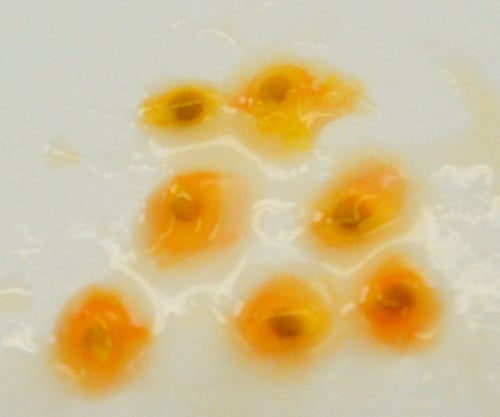
The gel does contain ABA, but the concentration is not much higher than in the rest of the flesh. ABA levels inside the seed were reported to be approximately 18 to 40 times higher than those found in the fruit juice and pulp.
The gel does play a role in preventing germination in a couple of ways:
- Osmotic Inhibition: The high osmotic potential (salt/sugar concentration) of the gel makes it difficult for the seed to take up water, which is necessary for germination.
- ABA Levels: While the ABA concentration in the mucilage gel is lower than in the seed, it is still a significant factor. Studies show that removing the mucilage allows developing seeds to germinate easily in water, but keeping them in the mucilage inhibits germination.
Fermentation is the traditional, messy method used to remove this gel and pulp. For a description of the method, see: Fermentation of Tomato Seeds – Is It Required?
Timing the fermentation is important. Periods longer than 48 hours can actually lead to reduced germination rates and weaker seedlings. The ideal time is 48 hours at around 25 degrees Celsius (or 77 degrees Fahrenheit).


Robert, I saw a video claiming that seeds germinated in the cold yield stronger seedlings than seeds of the same type germinated in the warmth. Could there be truth to this? If so, what could explain the difference?
I doubt it. However, extremes of temperature will affect how quickly a plant grows.
How do we measure “stronger”? Taller? Less leggy? Potential strength of a seedling is determined by its genetics, not how it germinates.
If you do winter sowing, the seedlings are small and tough, but that is mostly do to the light they are getting.
https://youtu.be/SO_KKbGYTEM&list=PLq7hmpP9i05Ska3k7gaBCvNCT9gN_tYaj
With tomato seeds, instead of fermentation, I rinse them in room-temperature water, rub between paper towels to rub off the gel, and repeat the process until the seeds are clean.
I’ve done this with store-bought tomatoes, not to grow adult plants, but just to test potting soil for the presence of pesticides. (You’ve suggested using tomato, pepper or bean seeds for this test.)
I’ve tried germinating Opuntia seeds, with poor results, even using GA-3 after rinsing the seeds several times over a period of several hours. The seeds had been in dry storage for a year. Supposedly 2 years dry storage is the optimum time Opuntia. I’ve also tried rubbing the seed coat with sandpaper, still got poor results.
Very interesting. What exactly is the nitrate solution % ? Would I use a regular fertilizer or a specific nitrate and if so what and where would I find it?
I always read your newsletter- very informative and helpful.