

Dish Soap like Sunlight or Dawn is a regular addition to home pest control remedies for the garden. You use dish soap every day and eat from the dishes you clean with it – how can it be harmful to plants? It’s time to look through the bubbles and see the truth.

Dish Soap – What is It?
Dish soap is a generic term, but it usually refers to the liquid soap products used for washing dishes. Dawn, Joy, Palmolive and Sunlight are very common brand names. It also goes by the names Dish washing liquid, washing-up liquid, dish washing soap, and dishwasher detergent.
Dish washing soap is a detergent that can include phosphate, bleach, enzymes, dyes, fragrances and rinsing aids.
Scientists distinguish between soap and detergents which, chemically, are quite different. Soaps are cleaning agents made from natural oils and fats. Detergents are cleaning agents made from synthetic chemicals called surfactants. Soap and detergents both clean, but the chemicals in the products are different.
Dish Soap is actually misnamed. It should be called Dish Detergent. You will see why this is important in a few minutes.
Dish soap works by dissolving greasy chemicals like oils, fats and waxes and it is excellent at this job. It is also a powerful degreaser.

Insecticidal Soaps – What Are They?
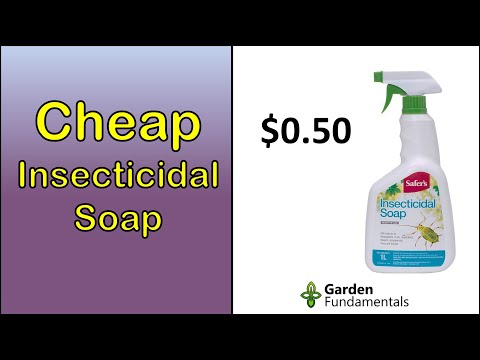
Insecticidal soaps are pesticides that are used in the garden. I’ll talk more about how and why to use them below.

Insecticidal soap is a true soap, not a detergent.
A soap is made by mixing together sodium hydroxide, or potassium hydroxide with fats. The final product is something called either sodium salt of fatty acid, or potassium salt of fatty acid. This is the same ingredient found in most bars of soap, and in liquid hand soap. Chemically these are very different from detergents, although both clean things.
Insecticidal soap is a special kind of soap. It is made using only potassium which produces a milder, softer soap than sodium. It also uses long chain fatty acids – a special type of fat. This soap is specially made to be mild on plants.
Soaps will also dissolve greasy chemicals like oil, fat and wax, but they are not as good at this job as detergents. From a cleaning perspective insecticidal soap is a great soap.
Dish Soap On Plants
What happens when you spray diluted dish soap on plants? Remember dish soap is a detergent that is excellent at removing oil, grease, and wax. When you spray it on your plants, it removes the natural oils and waxes that all plants have on their leaves. These oils and waxes serve to protect the leaves.
When the protective coating is removed from the leaves, it makes it easier for pathogens to get a foothold and infect the plants.
Spraying your plants with dish soap removes their natural defenses against pests and diseases. You are setting the stage for your plants to get sick, and maybe die.
DIY Insecticidal Soap
There are many DIY home recipes for making insecticidal soap. The problem is that NONE of them are insecticidal soap. If they use dish soap – they are detergents, not soaps. If they use liquid hand soap, the fatty acid salts are made from short chain fatty acids which are phytotoxic to plants – they damage plants. You can’t make insecticidal soap using things you find around the house.
One recipe on the internet says “Use a pure liquid soap… Don’t use detergents, dish soaps, or any products with degreasers, skin moisturizers, or synthetic chemicals. ” Soap is a synthetic chemical!
Will the homemade insecticidal soaps get rid of insects? Maybe, but they will also damage and weaken plants.
Is Dr. Bronner’s Castile Soaps Safe?
Castile soaps, of which Dr. Bronner’s is a popular brand, are made from vegetable oils (particularly olive, palm, and coconut) using potassium hydroxide. So they are potassium based soaps and therefore many people claim that they are the same as insecticidal soap. Most castile soaps are mixed with fragrances and essential oils for a wide range of uses but not as insecticides. This soap maybe safer than other sodium-based soap, but nobody really knows what the additives will do to plants. Since it is not labeled as a pesticide it should not be used.

Use Insecticidal Soaps Correctly
My post, Insecticidal Soap – Use it Correctly, provides more detailed information on how to use these products. In summary, they are only effective if you spray the insects – not the plants. Insecticidal soaps are much less harmful to plants, but even they should not be used to cover the whole plant. Although, fairly safe for plants, they will harm certain plants – look at the instructions an keep away from sensitive plants.


I think you are spot on about not using soap on plants. I have some avocado trees potted for indoors in a windy location (back porch.) They are very beautiful and healthy – except for the whiteflies. I put just a few drops of hand soap in a spray container and filled with water, and sprayed my avocado trees. Ugh! The new growth at the top of the plant died. The leaves appear rough and papery. Bronze spots developed. It totally makes sense about the leaves losing their protective waxy coating with the homemade soap concoction I made.
Im living partly in tanzania and starting to grow vegetables and plant trees. We are thinking of planting a fruit tree where the water comes out from the bathroom. Maby banana. Do you have any comments on that?
Not really. Provided the water does not contain a lot of harmful chemicals, the bathroom water should be fine.
So the soap from the shower that dissolves in the water and the shampoo and conditioner is ok for the plants?
No it is not.
For years my brother has routinely used a squirt of Joy dishwashing liquid dissolved in a full water bottle to spray his tomato plants to keep away bugs. He says it works very reliably, but does that soap get into the tomatoes we eat from the sprayed leaves or soil, and is that harmful?
Not any more harmful than eating off your washed plates.
My neem oil says to add 1 teaspoon of an ecologically friendly dish detergent to a small portion of the water as an emulsifier. What dish detergent would that be and does it have to be diluted also? I am returning to gardening after 20 years!
The best to use is insecticidal soap.
Thanks for your response.
Hello, I am opening a restaurant and we are planting trees and plants on the side of the concrete floor. We will have to scrub the floors from time to time. Any soap I can make that won’t kill the plant life. Thank you.
Pat Patrick.cox30@yahoo.com
I posted your question on The Garden professors FB Group, but did not really get a good answer. One answer was to use a power washer without soap. That might work. Most soap if used in moderation will probably not harm plants since it won’t contact the leaves. Once in the soil, microbes will start to decompose it.
What do you think about Dr. Bronner’s pure-castile soap?
Ingrediants: water, organic coconut oil, potassium hydroxide, organic palm kernal oil, organic olive oil, mentha arvensis, organic hemp oil, organic jojoba oil, mentha piperita, citric acid, tocopherol
It’s label lists among it’s uses for spraying plants for bugs.
How many of those chemicals have been tested on plants? Probably very few.
I’ve always been a fan of Dr. Bonner’s liquid soap and what they claim it is good for, heck you can brush your teeth with it, I did it once and lived. Plants should be ok with it too. The ingredients are all plant based, almost. Maybe a tablespoon to a gallon of water and spray ’em up and down? Dirty bugs won’t like it, plants should be nice and clean and smelling good, in theory. How did it work for you Todd?
Hi I accidentally spray thick fish détergent on My money plant…what should I do
Wash it off
Please i want to know in what proportion can i obtain a mixture of oil and liquid soap?
Not sure what you are asking.
Have used Dawn, Dawn Ultra and Totally Awesome at 1/4-1oz./gal. with most waterings along with Miracle Gro and Eleanor’s as instructed to soak foliage and previously useless, highly hydrophobic, sandy soil.
The results are gratifying: Faster growing, v. green foliage. Larger fruits, veggies and buds. Not much in the way of insects. Many bees and birds. As well, dishsoaps apparently have no ill-effects on soil microorganisms while killing soil pathogens and preventing salt-buildup at the roots.
Almost too good to be true but we have proven this over five seasons. It seems indispensable now…
So it keeps insects away – but not bees?
It does not affect the good soil microbes, but it kills the pathogen soil microbes?
This is a real specific pesticide!!!
sorry – the comments are not logical or supported by science.
This is empirical observation [n=1(!)]; maybe others will experiment as well. The bit about beneficial vs. pathologic organisms is available online; you can Google it. 2) Insect control/abatement and keeping bees around is not mutually exclusive; gardeners have been doing this forever.
Just thought you’d be interested. We don’t need your scientific blessings…
Well said. What works, works. If it is not damaging the soil after five seasons more power to you.
I am a firm believer that soaps and detergents really do work on many insect and fungus problems. I also think the chemical industry has invested billions of dollars to protect their product image and usage and will not be too supportive of any low cost natural remedy.
I don’t think any body said soaps do not kill some bugs. The point is they also harm plants.