How often should I water? This is one of the most common questions new gardeners ask. It sounds like a good question, and on social media, lots of people will supply an answer.
They are all wrong.


How often should I water? This is one of the most common questions new gardeners ask. It sounds like a good question, and on social media, lots of people will supply an answer.
They are all wrong.
Everybody tells you that plants need to be fed. Thousands of gardening books and blogs confirm the fact. Fertilizer companies certainly continue to make you feel as if you are letting your plants down if you don’t fertilize. And most nurseries try to push their products at checkout.
I have good news for you. In most garden situations, you do NOT need to fertilize.
The idea that ornamental gardens need fertilizer is a big myth.

Mushroom compost is used a lot for gardens, but it comes with a warning: don’t use too much because it contains a lot of salt. I have been aware of this for a long time, and I have even cautioned people about using too much. Salt can harm plants, and it only makes sense not to use a product loaded with salt.
I always wondered why mushrooms would be grown with high levels of sodium. Are the fungi that different from plants? Do they need high sodium levels? A little online research started to make things clear. It turns out to be a good example of the confusion caused between salt and salt—something every gardener should understand.

Growing food in plastic containers is on the rise, but is this a safe practice? What about the chemicals that leach out of plastic – are they absorbed by the soil or the food? Do they cause a health risk?
There is a great movement towards organic gardening to grow healthy food locally, and for smaller back yards and balconies it’s attractive to grow food in small containers. I’ve even seen pictures of people grow vegetables right in the bag that contained the soil they bought. This is all so simple but is it a healthy way to produce food? Is it still organic if you grow in plastic?

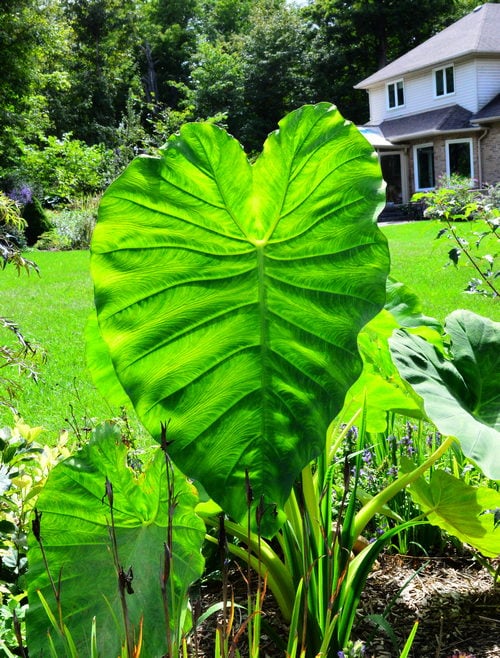
This is a great tropical looking plant, that is easy to grow, and makes a big statement especially in colder climates where such large growth is hard to come by. And even better, it is so easy to overwinter.
The year is 1919 and a 2 year old girl died next to a poinsettia tree. The cause, poinsettia poisoning. Ever since then people have been aware that this lovely Christmas plant can be dangerous in the home.
Now for the real truth about the poisonous poinsettia ……

The legume is commonly recommended as a companion plant. It is believed that the excess nitrogen produced by the legume will help feed the companion growing next to it. In the Three Sisters agriculture system the bean provides nitrogen for the corn to grow and since corn needs a lot of nitrogen, it grows better.
Legumes are also an important ingredient in crop rotation. Grow corn one year and follow that up with beans or peas the following year to restore the level of nitrogen in the soil.
There is no doubt that legumes are able to capture atmospheric nitrogen (using bacteria) and convert it to plant usable nitrogen, but how much of this actually benefits other plants? Are legumes a good source of nitrogen for the garden?

Do you want to start an online fight? Ask about using using gray water in the garden (also spelled graywater, grey water and greywater). Opinions vary widely, and both users and non-users feel very strongly about their position. You will see lots of opinions, and many statements that are false.
In highly developed countries there is a definite distrust of gray water, but as regions experience more drought people are starting to consider it as a viable option. Clean water, also called potable water, is wasted on landscapes and as the cost of it goes up, more and more gray water will be used. In this post I will discuss its use in the garden.

Garlic is one of the most popular companion plants. It can be grown next to most plants as a natural pest and fungus deterrent. It takes up little space, is not fussy about soil and can grow in most conditions.
I am sure that its pungent flavor is what convinces people that it keeps pests and diseases away. If it keeps vampires away, surely a few bugs are not a problem for it.

Is it time to update your grow light fixtures? Are you looking for a new grow light system? In both cases this post will provide you with all of the information you need to make the best choice.
LED lights have come a long way and if you are buying a new light today, LED is the way to go. They last a long time and provide a good level of light at a very low electrical cost. They are good for you, your plants and the environment.
If you already have a florescent grow light, consider replacing the bulb with an LED bulb that fits in your existing fixture.

Most gardeners work far too hard. Why? Because a lot of books and web sites tell you it’s the only way to keep plants growing well. As a young, inexperienced gardener I followed all the advice but over the years I have developed a new style of gardening. I now only do the work that is required.
This blog will save you hundreds of hours of work each year.
In this post I will reveal 10 things that you can stop doing in the garden because they are not needed by your plants. The focus in this post will be on ornamental gardens (perennials, grasses, shrubs and trees). In another post I will deal with vegetable gardens specifically.

I’d like to talk about the Three Sisters. No, not the play written by Russian playwright Anton Chekhov, and not the three mountain peaks near Canmore, Alberta , Canada. I am talking about Three Sisters Agriculture used by Native Americans; corn, beans and squash.
If you have read anything about companion planting you will have come across a description of the Three Sisters as one of the best examples of companion planting that works. But have you ever seen any data to show that this system works? Did the Native Americans actually use this system?
The Three Sisters are the corner stone of the companion planting movement and if it is all a myth, is there any validity to the whole idea?
