Fish fertilizer is a common organic fertilizer that is recommended for both houseplants and the garden. It has a strong following and its proponents feel that it is better than any other type of fertilizer, but how does it really stack up against the most common organic fertilizer; compost?
Fish fertilizer – are the accolades true, or a bit fishy?
Compost vs Fish Fertilizer, by Garden Fundamentals
The use of seaweed fertilizer, such as kelp, is becoming more popular, but does it really work?
It is a very dilute, expensive fertilizer so it does provide plants with some nutrients, but the claims for it go well beyond that. Seaweed also contains a number of other substances called biostimulants which are claimed to help plants grow, ward off disease and produce higher crop yields. The biostimulants in seaweed fertilizer might be more valuable than the NPK nutrients.
Given the high cost of seaweed extract, it’s important to know if these biostimulants really work.
Seaweed fertilizer and seaweed extracts are becoming more popular but there are concerns that harvesting and manufacturing it harms the environment. In this post I will look at how seaweed makes it to market and determine if it is an eco-friendly process.
Seaweed Fertilizer – Does it Harm the Environment?, photo by Scripps Institute
Fertilizing orchids has always been a mystery for the novice orchid grower, but once you understand your orchids it is very easy, as I’ll show you below.
It’s no surprise that fertilizing orchids is confusing since manufacturers go out of their way to make it complex. First of all, they sell special containers labeled for orchids. Here is your first news flash – there is no such thing as orchid fertilizer, and I will prove it below.
Secondly, they sell products you don’t need, like this orchid plant food mist. Not only is misting not good for orchids, but they don’t need a foliar fertilizer. If you think that misting helps keep the humidity high, have a look at Increasing Humidity for Indoor Plants – What works and What Doesn’t. But even that does not bother me too much. What really ticks me off is the price they charge for these products – its criminal.
Foliar feeding is becoming more popular among gardeners, in part because it seems to be an easy way to fix plant nutrient issues. When your plant is showing low levels of iron, spray some chelated iron onto the leaves and you have solved the problem. The second reason foliar feeding is more popular is that there are more products on the market. These include specialty foliar feed products as well as regular fertilizer which is being recommended as a foliar spray.
Baking soda in the garden seems to be the next fad. Numerous videos and blog posts tout the many ways you can use baking soda, but do any of these hacks work?
It’s a pesticide, a herbicide, a fertilizer and it makes tomatoes taste sweeter. You can even use it to measure the pH of your soil. It’s a wonder product for the garden. You might think that is all nonsense, but there is some truth in some of the claims. In this post I will look at the claims and separate fact from manure.
Baking Soda in the Garden – Hacks that Work and Don’t Work
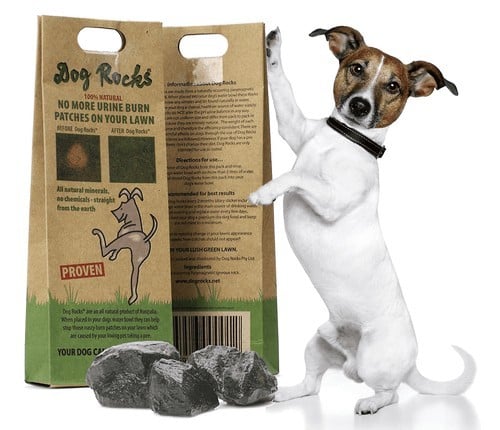
I first heard about Dog Rocks in a Facebook Group a couple of weeks ago. Someone was looking for a solution to the urine burn marks their dog left on the lawn, and Dog Rocks were suggested. Initially, I envisioned rocks being used to cover up the burn marks, but that is not how this product works. Instead, you put the rocks in the drinking water, and they absorb nitrates from the water. As one advertisement put it, “less nitrates going in means less nitrates coming out the other end.” With lower nitrates, the grass is not burned, and your dog no longer creates spots on the lawn.
Normally, when I review products for the garden, I try to be politically correct and bite my tongue, but not this time. This is the dumbest product I have ever come across. A small bit of logic will tell you that it has zero chance of working, and I’ll explain why shortly.
Synthetic fertilizer is shunned by organic gardeners, and one reason is the fact that they are made from petroleum, or so it is claimed. Who wants to put petroleum chemicals into their garden and then eat vegetables from it? Nobody.
Terms like oil-based fertilizer, petroleum fertilizer, and petrochemical fertilizer have been used to describe synthetic fertilizers, as in this quote from a popular gardening blog: “Petrochemical fertilizers are another name for the synthetic products because they are produced using large quantities of petroleum.”
I am not going to argue for or against synthetic fertilizer in this post. I just want to examine the claim that fertilizer is made from petroleum.
Synthetic Fertilizer Ingredients – Are They Made From Petroleum
What is the best manure for the garden? This question is routinely debated on social media providing a wide range of opinions. Some say chicken manure is great but others say it’s too hot and will burn plants. Horse manure can be used almost fresh, but cow manure needs to be composted. Sheep manure is higher in nutrients and sheep digest their food more fully – is that important? Some swear by rabbit manure.
Many of these discussions consist of a lot of opinions, but they’re very weak on facts. In this post I’ll look at the science and try to determine which manure is best.
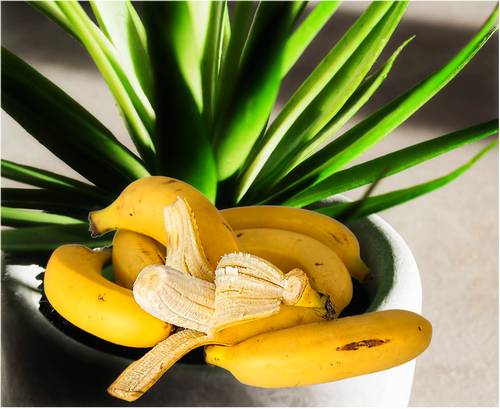
Banana peels are great for your plants, or at least that is what the internet says. You should bury some peels in the bottom of the hole when planting roses. You can add them to water and let them sit for a few days to make banana peel tea, an excellent fertilizer for indoor plants. Try drying them into a black leather and then crushing them to make banana skin powder which is great for the garden. I even found one web page that makes a fertilizer spray out of them.
Eating banana peels is also a hot topic and they reportedly provide all kinds of health benefits and even whiten teeth.
Lets have a look at the reality of banana peels for plants. Are they better than just another source of organic matter?
Humic Substances like humic acid are being promoted as important organic material that should be added to gardens to improve soil health. All gardeners have heard of humus, that friable, black gold that we all wish we had. Since you can’t buy humus, companies have started to provide the next best thing – humic substances.
You might think that humus and humic substances are the same thing, but they are not. We need to treat these two as separate products and evaluate each on its own merits.
In this post I will do a deep dive underground to better understand humic substances, humic acid and humates.
Humic Substances Like Humic Acid – Are They Good For the Garden?
You are looking for an organic fertilizer and trying to decide between liquid organic fertilizer and granular or dry organic fertilizer. Which is best? When should you use one or the other? Is one more organic than the other? Which one builds healthier soil?
There are many organic fertilizer options out there and in this post I’ll help you understand the choices.
Liquid vs Granular (Dry) Organic Fertilizer – Which is Best?